
INDIAN DANCE FORMS – A Concise Revision Note for UPSC Civil Services Examination
| ★ Why this topic matters for UPSC Classical vs folk dance identification, state-wise mapping, founders/revivalists and UNESCO tags are frequently asked in Prelims.Mains (GS-I, Art & Culture) may ask about the socio-religious significance and revival of classical dance forms.Essay/Interview: link dance to India’s composite culture and ‘Unity in Diversity’. |
1. Background & Origin
As per legend in Bharata Muni’s Natya Shastra, Lord Brahma combined elements of the four Vedas to create a fifth Veda – the Natya Veda. It is an amalgamation of dance, drama and music, drawing Pathya (words) from the Rig Veda, Abhinaya (gestures) from the Yajur Veda, Geet (music) from the Sama Veda, and Rasa (emotion) from the Atharva Veda.
- Mythological roots: Shiva’s Tandava symbolises the cosmic cycle of creation, preservation and destruction; Parvati’s response represents the feminine (Lasya) counterpart.
- Archaeological evidence: Bhimbetka rock-shelter engravings and the Bronze Dancing Girl of the Harappan civilisation show dance as a means of social entertainment since prehistoric times.
- Natya Shastra: Compiled between 200 BCE and 2nd century CE by Bharata Muni; it is the first formal, comprehensive treatise on Indian classical dance – covering technique, postures, emotions, ornaments, stage and audience. Dance is described as the ‘complete art’, encompassing music, sculpture, poetry and drama.
2. Aspects of Indian Classical Dance
2.1 Two Basic Aspects (Natya Shastra)
- Lasya – Denotes grace, bhava, rasa and abhinaya; symbolic of the feminine (soft) element of dance.
- Tandava – Symbolic of the masculine element; emphasis on rhythm and vigorous movement (associated with Shiva).
2.2 Three Basic Elements (Abhinaya Darpan by Nandikeshwara)
- Nritta – Basic, rhythmic dance steps devoid of expression or mood (pure dance).
- Natya – Dramatic representation; the story conveyed through the recital.
- Nritya – The sentiment/emotion evoked through dance, including mime and mudras.
Nandikeshwara also describes the Nayaka–Nayika Bhav, where the deity is the hero (Nayaka) and the devotee-performer is the heroine (Nayika).
2.3 Navarasa – The Nine Emotions
- Shringaara (love), Roudra (anger), Bibhatsa (disgust), Veera (heroism), Shaant (peace), Haasya (laughter/comedy), Karuna (tragedy), Bhayanak (horror), Adbhuta (wonder).
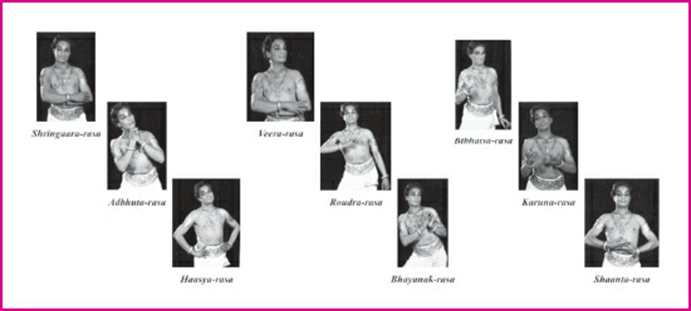
These moods are expressed through mudras – combinations of hand gestures and body postures. There are 108 fundamental mudras in Indian classical dance.
3. Classical Dance Forms of India
The Sangeet Natak Akademi (SNA) currently recognises eight classical dance forms. All are governed by the principles of the Natya Shastra and rely on the ‘Guru-Shishya Parampara’ (teacher-disciple tradition) for transmission of knowledge.
| ★ Exam Alert SNA recognises 8 classical dances. The Ministry of Culture recognises 9 classical dances – the extra one being Chhau (a folk-martial form covered later in this note). |
3.1 Bharatanatyam – Tamil Nadu
The oldest classical dance form; name derived from Bharata Muni and ‘natyam’ (Tamil for dance) – also linked to Bhava-Raga-Taal. It evolved from ‘Sadir’, the solo temple dance of Devadasis, and was earlier called Dashiattam.
- Revival: Nearly went extinct with the decline of the Devadasi system; revived by freedom fighter E. Krishna Iyer. Rukmini Devi Arundale gave it global recognition.
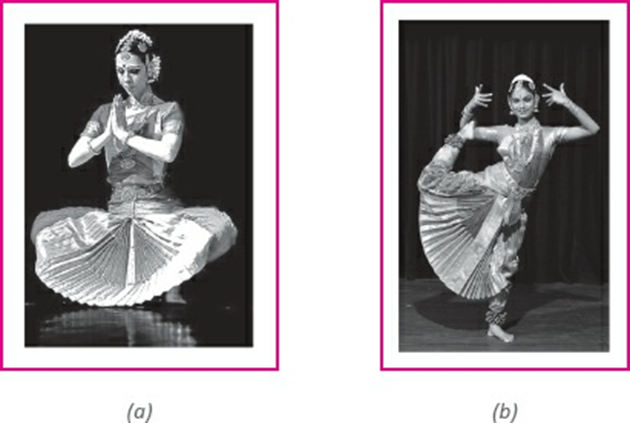
- Alarippu – Invocatory piece seeking divine blessings.
- Jatiswaram – Pure Nritta – poses and movement without expression.
- Shabdam – Dramatic element with words/abhinaya, in praise of God.
- Varnam – Nritya component; combines dance & emotion; most important part of the recital.
- Padam – Mastery of abhinaya of the spiritual message; light music, emotional dance.
- Jawali – Short, fast-tempo love lyrics.
- Thillana – Concluding pure-dance item with exuberant, intricate rhythm.
- The ‘Tanjore Quartet’ – Chinnaiah, Ponniah, Vadivelu and Shivanandam – codified the above elements in the 19th century; hence also called Tanjore Natyam.
- Called the ‘fire dance’ – movements resemble a dancing flame. Key mudra: Kataka Mukha Hasta (symbolises ‘Om’). Knees mostly bent, weight equal on both feet. Both Tandava and Lasya are emphasised.
Famous exponents: Yamini Krishnamurthy, Lakshmi Viswanathan, Padma Subramaniam, Mrinalini Sarabhai, Mallika Sarabhai.
3.2 Kuchipudi – Andhra Pradesh
Named after Kuchelapuram village; originally performed by travelling actor troupes (Kusselavas). Formalised in the 17th century by Siddhendra Yogi (author of Bhama Kalapam). Became a Brahmin-male temple art with the spread of Vaishnavism; revived in the 20th century by Balasaraswati, Ragini Devi and Lakshminarayan Shastry (who introduced solo & female participation).
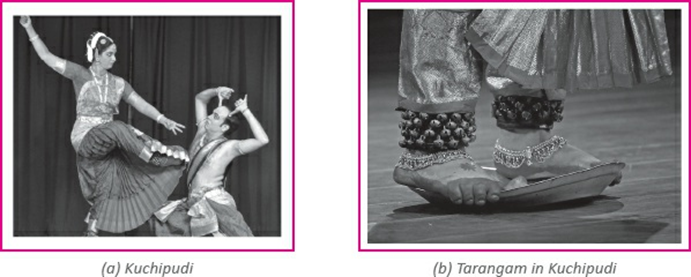
- Difficult footwork; usually a team performance with a secular theme (predominance of Shringaara rasa) though based on Bhagavata Purana.
- Each character introduces itself via a ‘daaru’ – a short dance-song composition.
- Sollakath/Patakshara (Nritta) and Kavutvams (Nritya, with acrobatics) are key components.
- Symbolises the element of Earth. Both Lasya and Tandava are important; performer may also sing.
- Popular solo items – Manduk Shabdam (frog story); Tarangam (dancing on the rim of a brass plate while balancing a pot/diyas); Jala Chitra Nrityam (drawing pictures on the floor with the toes).
Accompanied by Carnatic music (Violin, Mridangam); recital language – Telugu. Famous exponents: Radha & Raja Reddy, Yamini Krishnamurthy, Indrani Rehman.
3.3 Kathakali – Kerala
Evolved from the temple dance-drama traditions Ramanattam and Krishnattam; related to Koodiyattam (Sanskrit drama). Name from ‘Katha’ (story) + ‘Kali’ (drama/play). Declined with the fall of feudalism; revived in the 1930s by poet V. N. Menon under Mukunda Raja’s patronage.
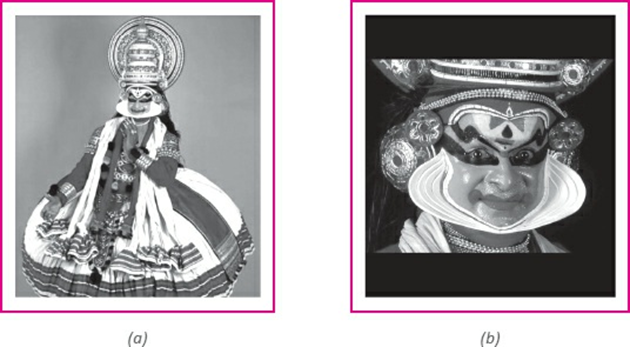
- All-male troupe performance with minimal props but very elaborate facial make-up and headgear.
- Colour code: Green – nobility/divinity/virtue; Red patches near nose – royalty; Black – evil/wickedness; Yellow – saints/women; fully Red face – evil; White beard – higher consciousness/divinity.
- Language: Manipravalam (mix of Malayalam & Sanskrit). Depicts the eternal conflict of good vs evil from epics/puranas – also called the ‘Ballad of the East’.
- Nine facial expressions (Navarasas) convey emotion through eyes and eyebrows; extensive hand gestures. Accompanying instruments: Chenda, Maddalam. Performed in open-air theatres, lit by a brass lamp. Symbolises the element of Sky/Ether.
Famous exponents: Guru Kunchu Kurup, Gopi Nath, Kottakal Sivaraman, Rita Ganguly.
3.4 Mohiniattam – Kerala
‘Dance of the Enchantress’ – a solo dance for women, developed further by Vadivelu (19th century) and patronised by Travancore ruler Swathi Thirunal. Revived by V. N. Menon and Kalyani Amma.
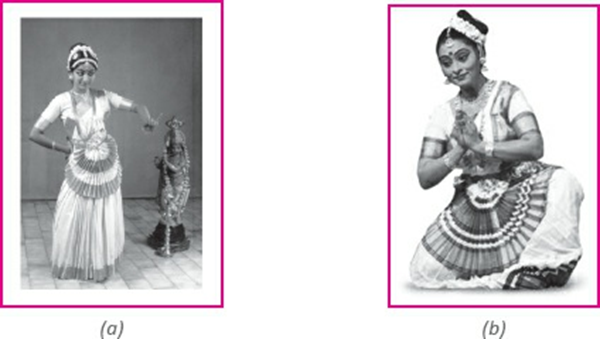
- Combines the grace of Bharatanatyam with the vigour of Kathakali; gentle footwork, no thumping. Narrates the feminine (Mohini) form of Vishnu.
- Lasya-dominant; costume is white/off-white with gold brocade; no elaborate face make-up; Ghungroo worn on ankles. Symbolises the element of Air.
- ‘Atavakul/Atavus’ – the 40 basic dance movements. Instruments: cymbals, veena, drums, flute.
Famous exponents: Sunanda Nair, Kalamandalam Kshemavathy, Madhuri Amma, Jayaprabha Menon.
3.5 Odissi – Odisha
Traced to the Udayagiri-Khandagiri caves; name from ‘Odra Nritya’ (Natya Shastra). Practised by ‘Maharis’ and patronised by Jain king Kharavela; later by ‘Gotipuas’ (boys dressed as girls) after Vaishnavism made the Mahari system defunct. Gained international acclaim via Charles Fabri and Indrani Rehman.
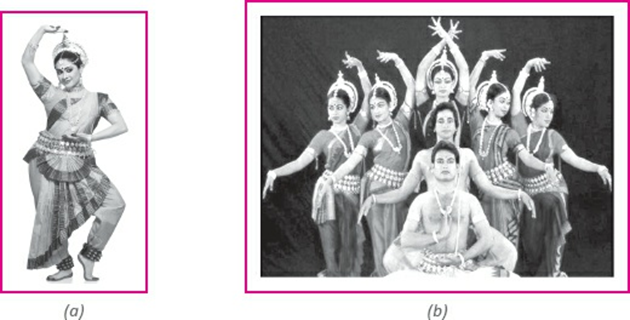
- Tribhanga (three-bend body posture) is distinctive; ‘Chowk’ posture (hands spread out) depicts masculinity. Lower body largely static; torso and hand gestures carry expression – called ‘mobile sculpture’.
- Sequence: Mangalacharan (invocation, flower offered to earth); Batu Nritya (Tribhanga & Chowk); Pallavi (facial expression); Tharijham (pure dance).
- Conclusion: Moksha (joyous, signifying liberation) or Trikhanda Majura (leave-taking from gods, audience, stage).
- Accompanied by Hindustani classical music; instruments – Manjira, Pakhawaj, Sitar, Flute. Lyrics from Jayadeva’s Gita Govinda. Symbolises the element of Water.
Famous exponents: Guru Pankaj Charan Das, Kelu Charan Mohapatra, Sonal Mansingh, Sharon Lowen (USA), Myrla Barvie (Argentina).
3.6 Manipuri – Manipur
Mythological origin in the celestial dance of Shiva-Parvati with local Gandharvas; traced to the Lai Haraoba festival. Gained prominence with 15th-century Vaishnavism (Krishna as central theme). Revived by Raja Bhagyachandra (18th c.); brought to wider fame by Rabindranath Tagore at Santiniketan.
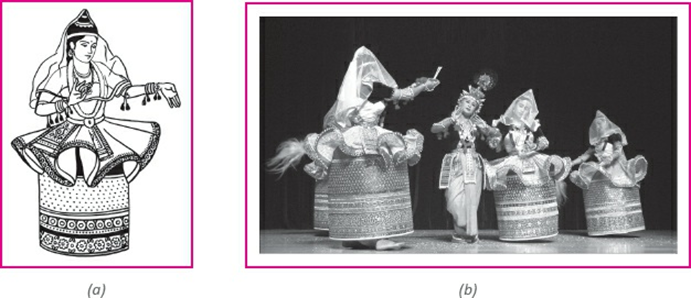
- Emphasis on devotion, not sensuality; faces covered with a thin veil – facial expression is less important than hand gestures and gentle footwork.
- Naga Bandha mudra – body connected in a figure-of-‘8’ curve. Ras Leela (Radha-Krishna) is a recurring theme. Main instrument: Pung (drum). Also linked to Thang-Ta and Sankirtana.
Famous exponents: Jhaveri Sisters (Nayana, Suverna, Ranjana, Darshana), Guru Bipin Singha.
3.7 Kathak – Uttar Pradesh
Traced to the Ras Leela of Brajbhoomi; derives its name from ‘Kathika’ (storytellers). During the Mughal era it became a court dance, absorbing Persian costume and style. Classical form revived by Lady Leela Sokhey in the 20th century.
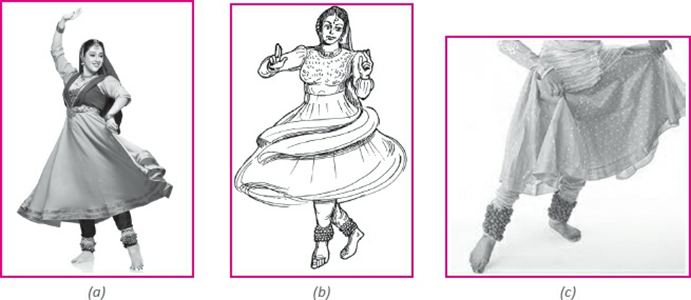
- Lucknow gharana – Reached its peak under Wajid Ali Khan; stresses expression and grace.
- Jaipur gharana – Initiated by Bhanuji; stresses speed, fluency and long rhythmic patterns.
- Raigarh gharana – Developed under Raja Chakradhar Singh; emphasis on percussion.
- Banaras gharana – Developed under Janakiprasad; more floorwork, symmetry.
- Elements of a recital: Ananda (entry), Thaat, Todas/Tukdas (fast rhythm pieces), Jugalbandi (dancer-tabla competitive play), Padhant (reciting bols), Tarana, Kramalaya (fast concluding footwork), Gat Bhaav (dance without music, to depict mythological episodes).
- Characterised by intricate footwork and pirouettes. Traditionally accompanied by dhrupad; Thumri, Ghazal and Tarana added during Mughal period.
Famous exponents: Birju Maharaj, Lacchu Maharaj, Sitara Devi, Damayanti Joshi.
3.8 Sattriya – Assam
Introduced in its modern form by Vaishnava saint Shankaradeva in the 15th century; name from the monasteries (‘Sattras’) where it was practised; inspired by the Bhakti Movement.
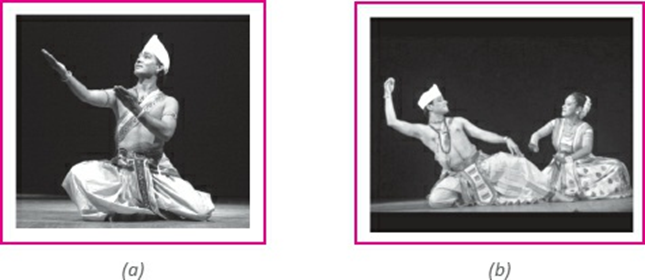
- Amalgamation of Assamese dance forms, mainly Ojapali and Devadasi traditions; devotional focus, narrating Vishnu’s mythology.
- Performed traditionally in groups by male monks (‘Bhokots’) as daily ritual. Instruments: Khol, Cymbals (Manjira), flute; songs are Shankaradeva’s ‘Borgeets’.
- Costumes: Dhoti and Paguri (turban) for men; Assamese jewellery, Ghuri and Chador in Pat silk for women. Two modern streams: Gayan-Bhayanar Nach and Kharmanar Nach.
- Ankia Naat – a musical-drama form of Sattriya (also called ‘Bhaona’), written in the Assamese-Maithili mix language Brajavali, narrating Krishna stories.
3.9 Quick Revision – Classical Dance Forms
| Dance Form | State | Element Symbolised | Revivalist(s) | Famous Exponents |
| Bharatanatyam | Tamil Nadu | Fire | E. Krishna Iyer, Rukmini Devi Arundale | Yamini Krishnamurthy, Padma Subramaniam, Mrinalini Sarabhai |
| Kuchipudi | Andhra Pradesh | Earth | Balasaraswati, Ragini Devi, Lakshminarayan Shastry | Radha & Raja Reddy, Yamini Krishnamurthy |
| Kathakali | Kerala | Sky / Ether | V. N. Menon (under Mukunda Raja) | Guru Kunchu Kurup, Kottakal Sivaraman |
| Mohiniattam | Kerala | Air | V. N. Menon, Kalyani Amma | Sunanda Nair, Kalamandalam Kshemavathy |
| Odissi | Odisha | Water | Charles Fabri, Indrani Rehman | Kelu Charan Mohapatra, Sonal Mansingh |
| Manipuri | Manipur | — | Rabindranath Tagore (popularised) | Jhaveri Sisters, Guru Bipin Singha |
| Kathak | Uttar Pradesh | — | Lady Leela Sokhey | Birju Maharaj, Sitara Devi |
| Sattriya | Assam | — | Sankaradeva (founder, 15th c.) | — (performed by Bhokots in Sattras) |
4. Folk Dances of India
Folk dances arise from local legends, myths and traditions. Unlike classical dance, they are spontaneous and performed by the masses without formal, codified training – yet each carries deep regional and religious significance.
4.1 Chhau – A Special Case (Jharkhand, Odisha, West Bengal)
Name derived from ‘Chhaya’ (shadow). A masked, martial dance narrating mythological stories; also includes nature-themes like Sarpa Nritya (serpent) and Mayur Nritya (peacock).
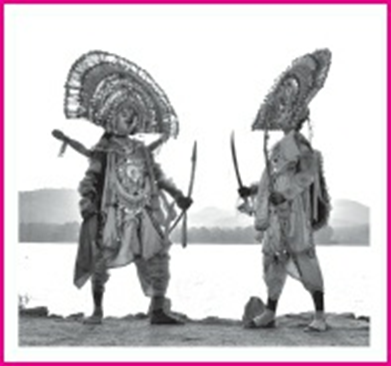
- Three styles: Saraikella Chhau (Jharkhand), Mayurbhanj Chhau (Odisha – no masks worn), Purulia Chhau (West Bengal).
- Inscribed by UNESCO in the Representative List of Intangible Cultural Heritage of Humanity in 2010. Note: Ministry of Culture counts Chhau as India’s 9th classical dance form.
4.3 Quick Revision – State-wise Folk Dances
| State / Region | Folk Dance(s) |
| Tamil Nadu | Kummi (women, circular, no instruments – only clapping); Kolattam / Pinnal Kolattam; Mayilattam (peacock dance) |
| Kerala | Kaikottikali (performed at Onam); Padayani (temple, masked – kolams); Kolkali-Parichakali (mock fight with sticks/shields, shared with Lakshadweep); Chakyar Koothu (solo, Malayalam narration); Mayilattam, Kummi |
| Andhra Pradesh | Burrakatha / Jangam Katha (solo narration of puranas); Butta Bommalu (masked, West Godavari) |
| Karnataka | Bhootha Aradhane (devil worship dance); Pata Kunitha (bamboo poles with ribbons, Mysore); Puja Kunitha (variant, Bengaluru-Mandya) |
| Punjab | Bhangra (male, harvest festival); Giddha (female counterpart); Jhoomar (tribal Sikhs, harvest) |
| Rajasthan | Ghoomar / Gangore (Bhil tribe women); Kalbelia (Kalbelia community, snake-charmer theme – UNESCO ICH 2010) |
| Gujarat | Garba (around a lit earthen pot – ‘Garbha Deep’, Navaratri); Dandiya Raas (mock fight, Durga vs Mahishasura) |
| Goa | Tarangamel (Dussehra/Holi, colourful flags); Fugdi (women, Konkan region) |
| Uttar Pradesh | Raslila (Braj, Radha-Krishna); Dadra (semi-classical, Lucknow courtesans); (Kathak also originates here) |
| Madhya Pradesh | Jawara (harvest, Bundelkhand); Matki (balancing pots on head, Malwa – variants Aada & Khada Nach) |
| Chhattisgarh | Gaur Maria (Bison Horn Maria tribe, Bastar); Raut Naach (Yadav community, Diwali) |
| Bihar | Biraha / Bidesia (performed by men, portrays separation); Jat-Jatin (Mithila, married-couple theme) |
| Jharkhand | Karma Naach (Karma festival, Chota Nagpur); Jhumar (harvest, also in Odisha); Alkap (dance-drama, Rajmahal hills) |
| West Bengal | Alkap (Murshidabad/Malda); Purulia Chhau (one of 3 Chhau styles) |
| Odisha | Dalkhai (Dussehra); Danda Nata / Danda Jatra (dance-drama-music, Shiva theme); Paika (martial, spear dance); Jhumar; Mayurbhanj Chhau (masks not worn) |
| Jharkhand (Chhau) | Saraikella Chhau (masked, martial – origin ‘Chhaya’ = shadow) |
| Assam | Bihu (group, men & women); (Sattriya also originates here) |
| Manipur | Thang-Ta (martial – sword ‘Thang’ & spear ‘Ta’); Sankirtana |
| Nagaland | Rangma / Bamboo Dance (war dance of the Nagas) |
| Sikkim | Singhi Chham (masked – snow-lion, honours Kanchenjunga) |
| Jammu & Kashmir | Dumhal (Wattal tribe, tall conical hats) |
| Mizoram | Cheraw (bamboo-stick dance, likely foreign origin) |
| Himachal Pradesh | Charba (Dussehra) |
| ★ High-Yield Facts for Prelims Panchabhoota (5 elements) linked to classical dance: Fire–Bharatanatyam, Earth–Kuchipudi, Air–Mohiniattam, Water–Odissi, Sky/Ether–Kathakali. UNESCO ICH tags: Chhau (2010) and Kalbelia (2010). SNA recognises 8 classical dances; Ministry of Culture recognises 9 (adds Chhau). Tanjore Quartet (Bharatanatyam): Chinnaiah, Ponniah, Vadivelu, Shivanandam. All-male performance traditions: Kathakali and Sattriya (by Bhokots). Martial folk/dance forms: Chhau, Paika, Thang-Ta, Kolkali-Parichakali, Pata Kunitha. Rabindranath Tagore popularised Manipuri dance at Santiniketan. Guru-Shishya Parampara is the common thread that binds all classical dance traditions. |
5. Conclusion
Indian dance forms – classical and folk – together reflect the country’s civilizational continuity, from the Natya Shastra’s codified aesthetics to the living, evolving folk traditions of every region. For the UPSC exam, focus on: origin & mythology, region/state association, revivalists, distinguishing features (costume, mudras, music), and UNESCO recognitions, since questions are frequently framed around matching and factual recall.