SSC CGL EXAM

Staff Selection Commission – Combined Graduate Level Examination – 2025

Staff Selection Commission has announced the schedule for recruitment of Group B and Group C posts in different Ministries/ Departments/ Organizations of Government of India and various Constitutional Bodies/Statutory Bodies/ Tribunals, etc.

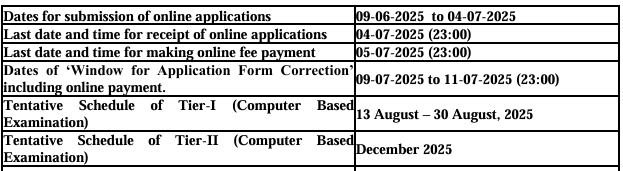
Important Dates
Women Candidates :

GOVERNMENT STRIVES TO HAVE A WORKFORCE WHICH REFLECTS GENDER BALANCE AND WOMEN CANDIDATES ARE ENCOURAGED TO APPLY

Details of the Posts:

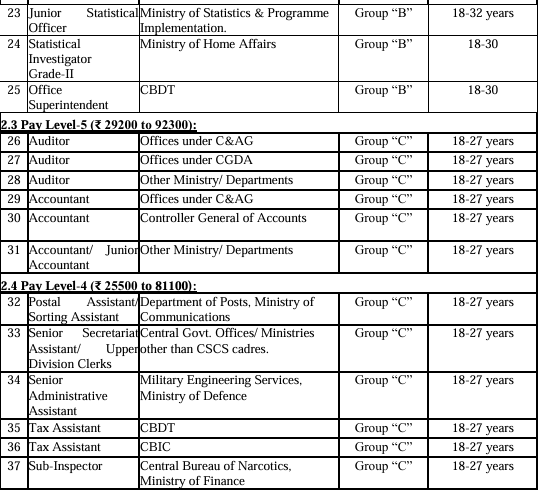
Following are the likely posts that will be filled up through this Examination:

Essential Educational Qualifications :

  • Bachelor‟s Degree from a recognized University or equivalent.
  • The candidates who have appeared in their final year of their graduation can also apply, however they must possess Essential qualification as on 01-08-2025.

Application Fee:

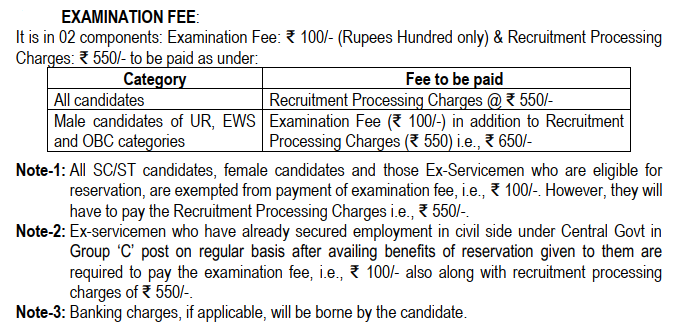
Fee payable: ₹100/- (Rs one hundred only).

Women candidates and candidates belonging to Scheduled Castes (SC), Scheduled Tribes (ST), Persons with Benchmark Disabilities (PwBD) and Ex-servicemen (ESM) eligible for reservation are exempted from payment of fee.

Scheme of the Examination:

The Computer Based Examination will be conducted in two tiers

  • Tier-I
  • Tier-II

Tier – I :

Tier-I will consist of Objective Type, Multiple choice questions. The questions will be set both in English & Hindi except for English Comprehension. There will be negative marking of 0.50 marks for each wrong answer

Tier II :

Tier-II has two papers Paper-I & Paper-II  which may be held in separate shift(s)/ day(s). It is compulsory for all the posts and has the following four sections as under:

Section-I: A) Mathematical Abilities B) Reasoning and General Intelligence.

Section-II: A) English Language and Comprehension B) General Awareness

Section-III: Computer Knowledge Test

Section-IV: Data Entry Speed Test
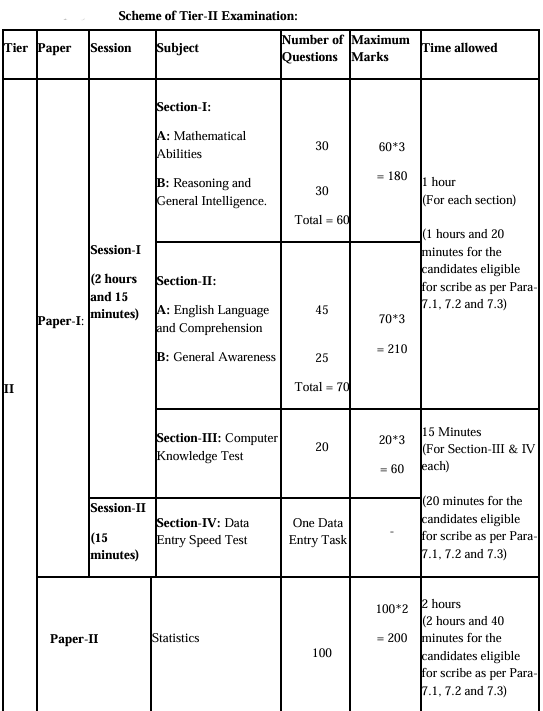
Tier II – Paper-I will be conducted in two Sessions ie, Session-I & Session II, on the same day.

Session-I consists of three sections , Section-I, Section-II and Section-III.

Therefore, duration of Session-I will be 2 hours and 15 minutes.

Section-I has two Parts viz. A (Mathematical Abilities) and B (Reasoning and General Intelligence). The candidates will get one hour to complete this section. On completion of one hour, this section will get automatically closed.

Immediately after completion of Section-I, the two Parts of Section-II viz. A (English Language and Comprehension) and B (General Awareness), will start. Section-II will also be for one hour and immediately on completion of one hour, this section will get automatically closed.

Section-III viz. Computer Knowledge Test will commence immediately after completion of Section-II and will be for a duration of 15 minutes. On completion of Section-III, Session-I will come to an end.

After the completion of Session-I, the candidates will get a break for re-registration for Session-II.

Session-II will include conducting of Section-IV of Paper-I i.e. Data Entry Speed Test.

Therefore, duration of Session-II will be 15 minutes only. After completion of Session-II, Paper-I will come to an end.

It will be mandatory for the candidates to qualify all the Sections of Tier II -Paper-I separately

There will be negative marking of 1 mark for each wrong answer in Section-I, Section-II and Section-III of Paper-I and of 0.50 marks for each wrong answer in Paper-II.

Section-III of Paper-I i.e. Computer Knowledge Test is mandatory but qualifying in nature.

DEST :

Section-IV of Paper-I i.e. Data Entry Speed Test (DEST):

It involves conducting of a Data Entry Speed Test (DEST) for a duration of 15 minutes in Session-II on the same day. The “Data Entry Speed Test” (DEST) Skill Test will be conducted for a passage of about 2000 (two thousand) key depressions for a duration of 15 (fifteen) minutes. Detailed instructions regarding Skill Test will be provided by the Regional Offices of the Commission .

DEST will be mandatory for all the posts; however, it will be qualifying in nature.
SSC CGL COURSE

40,000.00

Staff Selection Commission (SSC) holds Combined Graduate Level (CGL) Examination,  for filling up of various Group “B‟ and Group “C‟ posts in different Ministries/ Departments/ Organizations of Government of India and various Constitutional Bodies/Statutory Bodies/ Tribunals, etc.
Category:
Read more

Discovering Environmentally Friendly Pest Control Solutions

Introduction to Environmentally Friendly Pest Control Solutions

As we become increasingly aware of our impact on the planet, many homeowners are seeking environmentally friendly pest control solutions. These innovative methods not only prioritize family safety but also protect our precious ecosystems. Traditional pest control often relies on harsh chemicals that can pose risks to both human health and the environment. In contrast, natural remedies and non-toxic solutions offer effective alternatives that align with sustainable approaches.

For instance, essential oils like peppermint and tea tree oil serve as powerful pest deterrents. They can be used to repel insects without compromising the air quality in your home. Additionally, incorporating plants such as marigolds or basil in your garden can naturally deter pests while enhancing your landscape’s beauty.

Pest prevention is crucial for maintaining home health, and adopting pesticide alternatives contributes to a safer living environment. By embracing these eco-friendly practices, you can safeguard your family and explore innovative methods like https://andystermiteandfumigation.com/, playing a part in environmental protection and ensuring future generations enjoy a healthy planet.

Understanding the Importance of Family Safety in Pest Management

When it comes to pest management, prioritizing family safety is crucial. Traditional pest control methods often rely on chemical pesticides that can pose risks to your loved ones and pets. Instead, exploring non-toxic solutions and natural remedies can provide effective alternatives without compromising home health. For instance, using essential oils like peppermint or lavender can deter common pests such as ants and spiders while creating a pleasant atmosphere in your home.

Moreover, adopting sustainable approaches not only protects your family but also contributes to environmental protection. Innovative methods such as introducing beneficial insects like ladybugs can help balance pest populations naturally. These pest deterrents are not just safe; they often prove more efficient in maintaining a pest-free environment.

Incorporating pest prevention strategies goes hand-in-hand with these alternatives. Regularly sealing entry points, maintaining cleanliness, and removing food sources are simple yet effective steps every family can take. By choosing pesticide alternatives, you ensure a healthier home for everyone, fostering peace of mind while tackling pest issues.

Exploring Natural Remedies and Non-Toxic Solutions

In an era where environmental protection is paramount, exploring natural remedies and non-toxic solutions for pest control becomes essential for family safety and home health. Traditional pesticides often contain harmful chemicals that pose risks to both humans and pets. Instead, consider innovative methods that prioritize sustainability and safety. For instance, essential oils like peppermint and lavender serve as effective pest deterrents, deterring insects without the harsh side effects of synthetic chemicals.

Additionally, incorporating natural remedies such as diatomaceous earth can provide a safe barrier for pest prevention. It works by dehydrating insects, ensuring they don’t return, all while being safe for children and pets. These pesticide alternatives not only protect your home but also contribute to a healthier environment.

Utilizing these non-toxic solutions fosters a holistic approach to pest management, allowing you to maintain a harmonious home while safeguarding the planet. Embracing sustainable approaches not only reduces your chemical footprint but also encourages a thriving ecosystem in your garden and surrounding areas.

Innovative Methods and Sustainable Approaches for Pest Prevention

In today’s world, pest prevention is evolving with a focus on both effectiveness and safety. Homeowners are increasingly seeking non-toxic solutions that prioritize family safety and environmental protection. Innovative methods like utilizing essential oils, such as peppermint and lavender, serve as natural remedies that not only deter pests but also add pleasant aromas to your living spaces.

Another sustainable approach involves introducing beneficial insects, such as ladybugs and lacewings, to your garden. These natural predators feast on common pests, creating a balanced ecosystem while minimizing the need for harmful pesticides. Additionally, employing physical barriers, such as mesh screens and insect traps, provides effective pest deterrents without compromising health.

Moreover, practices like crop rotation and companion planting enhance pest prevention naturally. For instance, planting marigolds alongside vegetables can repel aphids and other unwanted insects. By embracing these pesticide alternatives, you not only safeguard your home health but also contribute to a more sustainable future. In this way, innovative methods and sustainable approaches are reshaping pest management for the better.

Practical Tips for Implementing Pesticide Alternatives at Home

Transitioning to pesticide alternatives can be both effective and safe for your family. Start by incorporating natural remedies such as diatomaceous earth or essential oils like peppermint and lavender, which serve as excellent pest deterrents.

Consider using homemade sprays made from vinegar or soap to tackle indoor pests. These non-toxic solutions are easy to create and help maintain a healthy home. For outdoor spaces, planting marigolds or mint can naturally repel insects while enhancing your garden’s beauty.

Regularly cleaning your home and sealing entry points will significantly aid in pest prevention. Additionally, employing sustainable approaches like composting can attract beneficial insects, further supporting environmental protection.

As you explore these innovative methods, remember to prioritize family safety. By choosing pesticide alternatives, you contribute to a healthier ecosystem and promote a safer home environment.

Read more

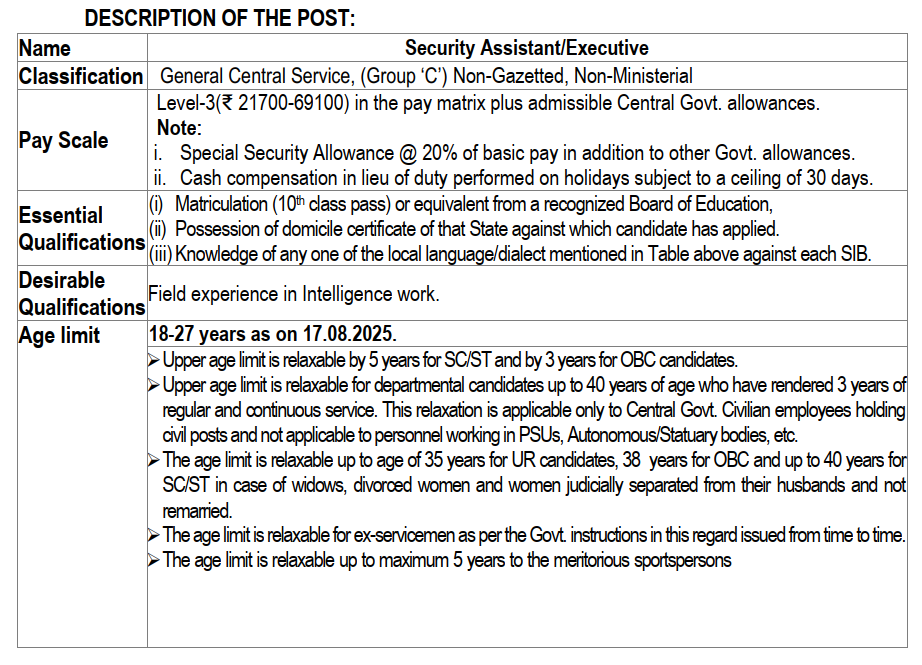
INTELLIGENCE BUREAU SECURITY ASSISTANT / EXECUTIVE EXAMINATION – 2025

The Intelligence Bureau (IB) has released the short notification for the IB Security Asssistant / Executive Recruitment 2025

Total Vacancies All India is 4987

Vacancies for South Indian States are as below :

LocationLocal LanguageTotal
BengaluruKannada204
ChennaiTamil285
HyderabadTelugu117
VijayawadaTelugu115
TrivandrumMalayalam334

KNOWLEDGE OF LOCAL LANGUAGE/DIALECT: Candidates applying for the vacancies for the post of SA/Exe of a particular SIB are required to possess knowledge of any one of the local language(s)/dialect(s) indicated against it. They should be able to read, write and speak in that language/dialect.

SELECTION OF CANDIDATES:

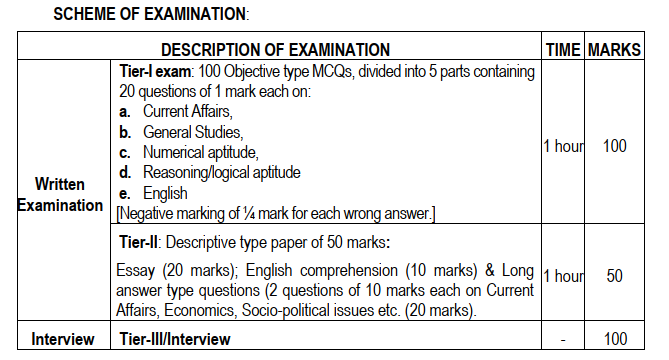
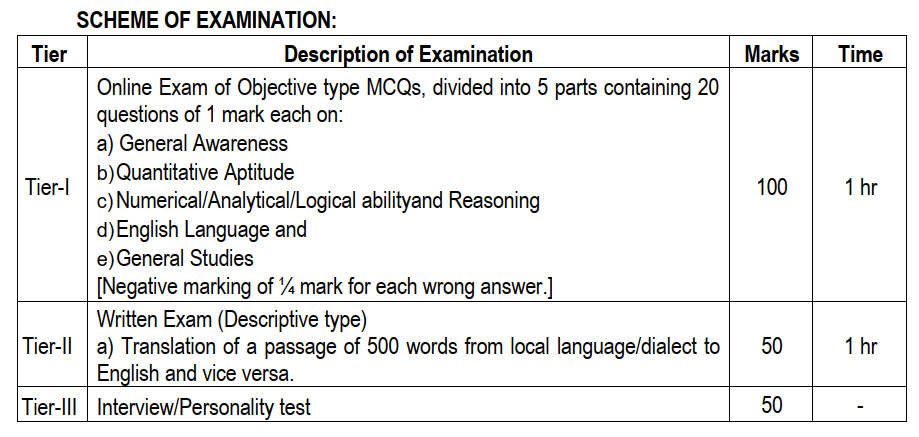
a) The candidate has to appear in Tier-I at one of the 5 centres allotted to him/her out of his/her choice of five cities. There will be negative marking of ¼ mark for each wrong answer. No marks would be awarded for an un-attempted question. The questions marked as “Mark for Review” by

the candidates will not be considered for evaluation.

b) In order to achieve qualitative selection & recruit the best available talent, there would be cut-off marks (out of 100) in Tier-I exam as under:

UR-30, OBC-28, SC/ST-25 & EWS-30 (all Ex-servicemen would be treated in their own category viz., UR/OBC/SC/ST/EWS)

c) On the basis of their performance & normalization of marks in Tier-I exam, qualified candidates would be shortlisted for Tier-II @ 10 times the number of vacancies, subject to the condition that the candidate should have scored minimum cut-off in Tier-1.

d) However, cut-off for Tier-I exam in different categories may go higher depending upon the marks obtained by candidates and number of vacancies.

e) The Tier-II exam is qualifying in nature. The qualifying marks in Tier-II is 20 out of 50.

f) On the basis of their performance & normalization of marks in Tier-I, the candidates would be shortlisted for Tier-III/Interview @ 5 times the number of vacancies subject to the condition that the candidate secures minimum qualifying marks (20 out of 50) in Tier-II exam.

g) On the basis of combined performance in Tier-I and Tier-III exam, a final merit list for the post of SA/Exe, will be prepared

h) The final selection to the post would further be subject to successful completion of Character & Antecedent verification followed by Medical Examination, etc

INTELLIGENCE BUREAU SECURITY ASSISTANTS COURSE

25,000.00

TestWizard offers cutting edge training for candidates to clear the IB Security Assistants Exam through Online sessions, Mock Tests covering all aspects of the exam such as Numerical Aptitude  , Reasoning / logical aptitude , English , General Studies , Current Affairs ,  language proficiency (Tamil , Hindi only)


Category:
Read more

INTELLIGENCE BUREAU ASSISTANT CENTRAL INTELLIGENCE OFFICER  GRADE – II EXAM 2025

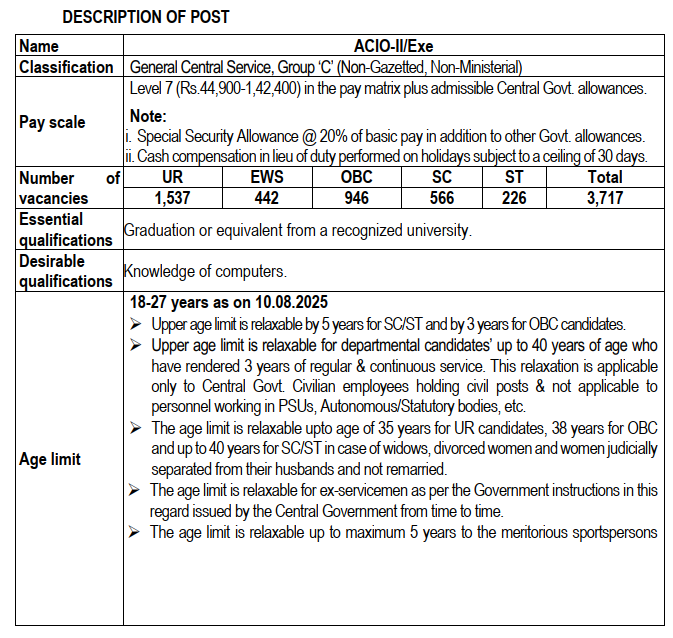
The Intelligence Bureau (IB) has released the short notification for the IB Assistant Central Intelligence Officer (ACIO) Executive Recruitment 2025. 

A total of 3,717 vacancies have been announced under this recruitment drive. 

The online application process will begin on July 19, 2025, and continue until August 10, 2025.The recruitment is being conducted for the post of Grade II/Executive across various categories.

Interested candidates must meet the eligibility criteria and apply through the official website of the Ministry of Home Affairs at https://www.mha.gov.in/en.

SELECTION OF CANDIDATES:

a) The candidate has to appear in Tier-I at one of the 5 centres allotted to him/her out of his/her choice of five cities. There will be negative marking of ¼ mark for each wrong answer. No marks would be awarded for an un-attempted question. The questions marked as “Mark for Review” by

the candidates will not be considered for evaluation.

b) In order to achieve qualitative selection & recruit the best available talent, there would be cut-off marks (out of 100) in Tier-I exam as under:

UR-35, OBC-34, SC/ST-33 & EWS-35 (all Ex-servicemen would be treated in their own category viz., UR/OBC/SC/ST/EWS)

c) On the basis of their performance & normalization of marks in Tier-I exam, candidates would be shortlisted for Tier-II @ 10 times the number of vacancies, subject to the condition that the candidate should have scored minimum cut-off in Tier-1.

d) However, cut-off for Tier-I exam in different categories may go higher depending upon the marks obtained by candidates and number of vacancies. Similarly, the criteria of 5 times the number of

vacancies (Tier-III) may also remain restricted due to said cut-off in Tier-I.

e) On the basis of their combined performance in Tier-I and Tier-II, the candidates would be shortlisted for Tier-III/Interview @ 5 times the number of vacancies subject to the condition that the candidate secures minimum 33% marks (17 out of 50) in Tier-II exam.

f) On the basis of combined performance in Tier-I, Tier-II and Tier-III/Interview exam, a final merit list for the post of ACIO-II/Exe will be prepared.

g) The Final selection to the posts would be further subject to successful completion of Character & Antecedent verification followed by Medical Examination, etc.

INTELLIGENCE BUREAU ACIO COURSE

30,000.00

TestWizard offers cutting edge training for candidates to clear the IB ACIO Exam through Online sessions, Mock Tests covering all aspects of the exam such as Numerical Aptitude  , Reasoning / logical aptitude , English , General Studies , Current Affairs , English Descriptive paper (Essay and Comprehension) , Essay writing on socio political issues

Category:
Read more
Back to Top
error: Content is protected !!