Gametogenesis-Oogenesis-Spermatogenesis

Gametogenesis is defined as the process through which gametes are formed in reproducing organisms. In mammals, the gametogenesis process in males is called spermatogenesis (formation of sperms) and in females, it is called oogenesis (formation of ovum).

Gametogenesis can be of two types – 

  • Spermatogenesis – formation of sperm in the testes of males.
  • Oogenesis – Formation of ovum in the ovary of females.

Gametogenesis

Oogenesis

We have already discussed that oogenesis is the process of formation of ovum within the ovaries. Did you know that in mammals, oogenesis begins even before a female is born? Oogenesis begins in the ovary of a developing female foetus as early as the 25th week of pregnancy. Let us now get into the details of the process.

Oogenesis is completed in three stages – multiplication stage, growth phase and maturation phase.

Multiplication phase

During foetal development, as the process of oogenesis begins, few cells of the germinal epithelium enlarge and undergo repeated mitotic divisions to form a group of germ cells known as oogonia or egg mother cells. Around two to eight million oogonia are formed in the foetal ovary and no more oogonia is added or formed in the ovary after birth. Each oogonia undergoes repeated mitotic division and forms a group of cells which project into the stroma of the ovary in the form of a cord known as the egg tube of Pfluger. This tube soon takes the form of a round egg nest.

Growth phase

Formation of primary follicle

Only one of the cells within the round egg nest enlarges to become the primary oocyte. The rest of the cells, known as granulosa cells, form a layer around the primary oocyte which is known as the follicular epithelium. The primary oocyte surrounded by the follicular epithelium forms the primary follicle.

The growth phase of the primary oocyte is very long and elaborate and involves a number of changes. The oocyte increases in size many-fold due to accumulation of reserve food materials. The number of mitochondria increases along with the activity of the endoplasmic reticulum and Golgi complex. A vitelline membrane forms around the oocyte. The nucleus of the oocyte increases in size due to increase in nucleic acid content and the number of nucleoli. rRNA genes amplify to synthesise more rRNA which would eventually help in synthesising more ribosomes for protein synthesis.

Maturation phase

The maturation phase begins when the nucleus of the primary follicle starts dividing meiotically but is arrested at the diplotene stage of prophase I at the foetal stage. Further nuclear division occurs only at the age of puberty.

A human female is born with around two million primary oocytes of which many degenerate till she reaches puberty. Only 60,000-80,000 primary follicles remain at the age of puberty, of which only 400-500 mature into ova during a woman’s lifetime. 

At puberty, the primary follicles start transforming into secondary follicles and get surrounded by several layers of granulosa cells and a new theca.

The secondary follicle gradually transforms into a tertiary follicle by the appearance of a fluid filled cavity known as the antrum. The fluid is known as the liquor folliculi and provides nutrition to the growing primary oocyte. The formation of the antrum causes the follicular cells of the theca to be organised into an outer theca externa and an inner theca interna.

Formation of Graafian follicle

The tertiary follicle matures into a Graafian follicle. This is the mature mammalian follicle and is about 2.5 cm in diameter. The wall of the Graafian follicle is made up of several layers of granular follicular cells and is divided into theca interna and theca externa. A fluid filled cavity called the antrum is present which is filled with the fluid liquor folliculi secreted by the follicular cells. The oocyte is attached to the granulosa cells of the follicular wall with the help of a cluster of cells known as cumulus oophorus. The secondary oocyte in the Graafian follicle is surrounded by a thick, non-cellular layer known as the zona pellucida and a layer of follicular cells known as the corona radiata.

Completion of first meiotic division and formation of secondary oocyte

Within the Graafian follicle the primary oocyte grows in size and it completes the first meiotic division which leads to the formation of a haploid secondary oocyte and a haploid polar body. The division of ooplasm (cytoplasm of the oocyte) is unequal and the secondary oocyte retains most of the nutrient rich cytoplasm of the primary oocyte while the first polar body receives very less ooplasm. As for the fate of the first polar body, nothing is known. It is known to have no function. 

The nucleus of the secondary oocyte enters into the second meiotic division. At the time of ovulation, the mature graafian follicle rises to the surface of the ovary and ruptures to release the egg or ovum at the secondary oocyte stage with its nucleus arrested at the metaphase II stage of the second meiotic division. This process is known as ovulation. 

The secondary oocyte completes the second meiotic division only after it is fertilised by a sperm. The completion of the second meiotic division also results in the formation of an ovum and a second polar body. Meanwhile, the first polar body also completes the second meiotic division and forms two polar bodies. Thus, after the completion of meiosis of the primary oocyte, a haploid ovum and three haploid polar bodies are formed. The polar bodies have no function. If the fertilisation does not occur within 24 hours of ovulation, the oocyte degenerates remaining arrested in meiosis II of cell division.

Fig: Meiotic division during oogenesis

The ruptured Graafian follicle is left containing a blood clot known as the corpus haemorrhagic. The follicular cells of the ruptured follicle form a yellowish mass which is known as the corpus luteum. It is responsible for the secretion of the progesterone and relaxin hormones. In the absence of fertilisation, the corpus degenerates in about a week and appears as a white mass known as corpus albicans.

Ovulation

The mature Graafian follicle reaches the surface of the ovary and ruptures to release the secondary oocyte by the process of ovulation. It is caused by the increased turgidity in the follicle. Contraction of the smooth muscles around the follicle also helps in the process. In human females, only one egg is released from either one of the ovaries during ovulation of a menstrual cycle.

Hormones – Oogenesis

The hypothalamus releases the gonadotropin releasing hormone (GnRH) which stimulates the anterior pituitary to release two gonadotropic hormones named FSH (follicle stimulating hormone) and LH (Luteinising hormone). FSH stimulates follicular growth and oocyte maturation. The granulosa cells of the developing follicles also release a hormone named oestrogen. When the level of oestrogen and LH becomes very high, the Graafian follicle ruptures and releases the egg by the process of ovulation. High concentration of oestrogen prevents further release of GnRH and FSH. 

LH promotes the conversion of the ruptured Graafian follicle into corpus luteum which secretes progesterone. Progesterone promotes development of the uterus to prepare itself for receiving the fertilised zygote.

In case of fertilisation, the corpus luteum persists and as progesterone levels increase, it inhibits further secretion of GnRH and consequently the release of FSH, LH and oestrogen is also inhibited. This prevents further growth and maturation of follicles and hence no ovulation occurs as long as pregnancy is maintained.

In case there is no fertilisation, the corpus luteum degenerates and the uterine lining sheds. As the level of progesterone goes down, the release of GnRH increases and the body gets ready for the next menstrual cycle and development of primary follicles.

The role of hormones in oogenesis is to regulate the development and maturation of the female gametes, or eggs, in the ovaries. Hormones are chemical messengers that are produced by endocrine glands and travel through the bloodstream to target organs. The main hormones involved in oogenesis are:

  • Gonadotropin-releasing hormone (GnRH): This hormone is released by the hypothalamus, a part of the brain that controls many bodily functions. GnRH stimulates the anterior pituitary gland, another endocrine gland in the brain, to secrete two other hormones: follicle-stimulating hormone (FSH) and luteinizing hormone (LH).
  • Follicle-stimulating hormone (FSH): This hormone stimulates the growth and development of the ovarian follicles, which are structures that contain the primary oocytes, or immature eggs. FSH also induces the production of estrogen by the follicular cells, which are the cells that surround the oocytes.
  • Estrogen: This hormone is produced by the follicular cells and has several functions in oogenesis. Estrogen promotes the growth and maturation of the oocytes and the follicles, prepares the uterus for implantation of a fertilized egg, and inhibits the secretion of FSH by the anterior pituitary gland through a negative feedback mechanism. Estrogen also triggers a positive feedback mechanism that causes a surge of LH secretion by the anterior pituitary gland.
  • Luteinizing hormone (LH): This hormone is responsible for inducing ovulation, which is the release of a secondary oocyte, or mature egg, from the ovary. LH also stimulates the transformation of the ruptured follicle into a structure called the corpus luteum, which produces another hormone: progesterone.
  • Progesterone: This hormone is produced by the corpus luteum and has several functions in oogenesis. Progesterone maintains the thickness and blood supply of the uterine lining, supports the implantation and development of a fertilized egg, and inhibits the secretion of GnRH, FSH, and LH by the hypothalamus and the anterior pituitary gland through a negative feedback mechanism. If the egg is not fertilized, the corpus luteum degenerates and the levels of progesterone drop, leading to the shedding of the uterine lining, or menstruation.

These hormones work together to coordinate the process of oogenesis and the menstrual cycle, which are the main events of female reproduction.

Fig: Hormonal control of oogenesis

Spermatogenesis vs Oogenesis

Similarities

  • Both the processes occur in the germ cells of the gonads.
  • Both result in the formation of haploid gametes
  • Both the processes involve a multiplication phase, a growth phase and maturation phase.
  • In both the processes, changes occur in both the nucleus and the cytoplasm of the primary spermatocyte and primary oocyte.

Differences

  • Spermatogenesis begins at puberty in males whereas the process of development of oocytes for oogenesis begins at the foetal stage during the 25th week of development.
  • Spermatogenesis results in the formation of millions of sperm cells (male gametes) but oogenesis results in the formation of only one egg or ovum (female gamete) during each menstrual cycle.
  • In spermatogenesis, the spermatogonia go through four more stages to form the sperm, namely, primary spermatocyte, secondary oocyte, spermatids and spermatozoa or sperm. In oogenesis, the oogonia go through three stages only, primary oocyte, secondary oocyte and finally form the ovum.
  • During spermatogenesis, meiosis results in equal cell division and formation of four spermatids. During oogenesis, the meiotic divisions are unequal and result in the formation of a single large ovum and three small non-functional polar bodies.

Ploidy

Ploidy level of Nucellus, Endosperm, Polar nuclei, Megaspore mother cell, female gametophyte respectively are

  • Nucellus, microspore mother cells (MMC), and megaspore mother cells are part of sporophyte so these are diploid cells and their ploidy is 2n. And female gametophytes are part of gametophyte and ploidy is n.
  • The endosperm constitutes an organism separate from the growing embryo. About 70% of angiosperm species have polyploid endosperm cells. These are typically triploid but can vary widely from diploid (2n) to 15n.
  • Sperm released fuses with the two polar nuclei forming a triploid cell that develops into the endosperm.
  • A megaspore mother cell is a diploid cell in which meiosis occurs, resulting in the production of four haploid megaspores.
  • Hence, Ploidy level of Nucellus, endosperm, polar nuclei, Megaspore mother cell, female gametophyte respectively are 2n,3n,n,2n,n.

Q1. At which stage of the cell cycle are primary oocytes arrested till they reach puberty?
a) Diplotene stage of Prophase I
b) Diakinesis stage of Prophase I
c) Leptotene stage of Prophase I
d) Zygotene stage of Prophase I

ANSWER

Oogonia or the egg mother cells are formed during the 25th week of foetal development. The oogonial cells divide mitotically and multiply to form a round egg nest. Only one of the oogonial cells enlarges and becomes the primary oocyte while the rest of the follicular cells surround it and together they form the primary follicle. During the maturation phase, the primary oocyte enters the first meiotic division but it gets arrested at the diplotene stage of prophase I until the individual reaches puberty. Hence the correct option is (a). Diplotene stage of Prophase I

Q2. A female born with two million primary oocytes in each ovary can produce a maximum of more than two million eggs in her lifetime. Is the given statement true or false?

ANSWER

Oogenesis begins during the 25th week of foetal development and from the diploid oogonial cells, around two million primary oocytes are formed which remain arrested at the diplotene stage of prophase I of their first meiotic cell division, until the reach puberty. No more primary oocytes are formed or produced after birth. By the time a female reaches puberty, many oocytes degenerate and only around 60,000-80,000 oocytes remain. Of these, only around 400-500 eggs are able to mature in a woman’s lifetime. Even if there was no degeneration of oocytes, the maximum number of eggs would not have exceeded two million as no new oocytes are formed after birth. Thus, the given statement is false.

Q3. Choose the option which shows the correct ploidy for the given cell types

a) Primary oocyte: 2n; Secondary oocyte: n; Ovum: n
b) Primary oocyte: n; Secondary oocyte: 2n; Ovum: n
c) Oogonium: 2n; Primary oocyte: n; Secondary oocyte: 2n
d) Oogonium: n; Primary oocyte: 2n; Secondary oocyte: 2n

ANSWER

Q4. A person with 4n chromosomes will have _______ set of chromosomes in their first polar body.

a) n
b) 3n
c) 2n
d) more than 4n

ANSWER

Q5. How big is an egg cell compared to a sperm?

ANSWER

Q6. Why are egg cells larger than sperm cells?

ANSWER

Q7. What does ‘freezing one’s eggs’ mean?

ANSWER

Q8. What triggers the completion of the second meiotic division in the secondary oocyte?

ANSWER

Q9. (NEET 2022 question)Which of the following statements are true for spermatogenesis but do not hold true for Oogenesis ?
(a) It results in the formation of haploid gametes 
(b) Differentiation of gamete occurs after the completion of meiosis 
(c) Meiosis occurs continuously in a mitotically dividing stem cell population 
(d) It is controlled by the Luteinising hormone (LH) and Follicle Stimulating Hormone (FSH) secreted by the anterior pituitary
(e) It is initiated at puberty 

Choose the most appropriate answer from the option give below :

  1. (b), (c), and (e) only 
  2. (c) and (e) only 
  3. (b) and (c) only
  4. (b), (d) and (e) only

ANSWER

Q10. (NEET 2022 question) At which state of life the oogenesis process is initiated?

  1. Adult
  2. Puberty
  3. Embryonic development stage
  4. Birth


ANSWER

Take Quiz

1. A/An ________ is released at the time of ovulation.
(a) oogonium
(b) primary oocyte
(c) ovum
(d) secondary oocyte

ANSWER

d) secondary oocyte

2. Rapid secretion of _____ induces ovulation.
(a) FSH
(b) estrogen
(c) progesterone
(d) LH

ANSWER

d) LH

3. One primary oocyte produces _ female gamete(s).
(a) 4
(b) 2
(c) 3
(d) 1

ANSWER

d) 1

4. Which of the following hormones stimulates the development of ovarian follicles?
(a) FSH
(b) estrogen
(c) progesterone
(d) LH

ANSWER

a) FSH

5. The process of formation of a mature female gamete is called ________.
(a) spermatogenesis
(b) menstruation
(c) ovulation
(d) oogenesis

ANSWER

d) oogenesis

6. The non-cellular membrane of human ovum is called ________.
(a) zona pellucida
(b) zona radiata
(c) membrana granulosa
(d) vitelline membrane

ANSWER

a) zona pellucida

7. The division in primary oocytes arrests at _______ stage.
(a) prophase of meiosis I
(b) metaphase of meiosis I
(c) prophase of meiosis II
(d) metaphase of meiosis II

ANSWER

a) prophase of meiosis I

8. The division in secondary oocytes arrests at _______ stage.
(a) prophase of meiosis I
(b) metaphase of meiosis I
(c) prophase of meiosis II
(d) metaphase of meiosis II

ANSWER

d) metaphase of meiosis II

9. Capacitation is the change in ________.
(a) sperm after fertilisation
(b) ovum after fertilisation
(c) ovum before fertilisation
(d) sperm before fertilisation

ANSWER

d) sperm before fertilisation

10. Meiosis II in secondary oocytes is not completed until ________.
(a) birth
(b) uterine implantation
(c) fertilisation
(d) puberty

ANSWER

c) fertilisation

Read more

Kinematics

Kinematics is defined as the study of motion without considering its causes. The word “kinematics” comes from a Greek term meaning motion and is related to other English words such as “cinema” (movies) and “kinesiology” (the study of human motion). In one-dimensional kinematics we will study only the motion of a ball, for example, without worrying about what forces cause or change its motion. Such considerations come in other chapters. In this chapter, we examine the simplest type of motion—namely, motion along a straight line, or one-dimensional motion.

Position

In order to describe the motion of an object, you must first be able to describe its position—where it is at any particular time. More precisely, you need to specify its position relative to a convenient reference frame. Earth is often used as a reference frame, and we often describe the position of an object as it relates to stationary objects in that reference frame. For example, a rocket launch would be described in terms of the positionof the rocket with respect to the Earth as a whole, while a professor’s positioncould be described in terms of where she is in relation to the nearby white board.  In other cases, we use reference frames that are not stationary but are in motionrelative to the Earth. To describe the position of a person in an airplane, for example, we use the airplane, not the Earth, as the reference frame.  

Displacement

If an object moves relative to a reference frame (for example, if a professor moves to the right relative to a white board or a passenger moves toward the rear of an airplane), then the object’s position changes. This change in position is known as displacement. The word “displacement” implies that an object has moved, or has been displaced.

Definition: 

DISPLACEMENT

Displacement is the change in position of an object:

Δx=xf−x0,

where Δx is displacement , xf is the final position and x 0 is the initial position

In this text the upper case Greek letter Δ always means “change in” whatever quantity follows it; thus, Δx means change in position

We can find displacement by subtracting initial position X0 from the final position Xf

Note that the SI unit for displacement is the meter (m), but sometimes kilometres, miles, feet, and other units of length are used. Keep in mind that when units other than the meter are used in a problem, you may need to convert them into meters to complete the calculation.

A professor paces left and right while lecturing. Her position relative to Earth is given by x. The +2.0 m displacement of the professor relative to Earth is represented by an arrow pointing to the right.

A passenger moves from his seat to the back of the plane. His location relative to the airplane is given by x. The −4.0 m displacement of the passenger relative to the plane is represented by an arrow toward the rear of the plane. Notice that the arrow representing his displacement is twice as long as the arrow representing the displacement of the professor (he moves twice as far)  

Note that displacement has a direction as well as a magnitude. The professor’s displacement is 2.0 m to the right, and the airline passenger’s displacement is 4.0 m toward the rear. In one-dimensional motion, direction can be specified with a plus or minus sign. When you begin a problem, you should select which direction is positive (usually that will be to the right or up, but you are free to select positive as being any direction).

The professor’s initial position is X0 =1.5 m and her final position is Xf =3.5 m . Thus her displacement is

Δx=Xf−X0=3.5 m−1.5 m=+2.0 m.

In this coordinate system, motion to the right is positive, whereas motion to the left is negative.

Similarly, the airplane passenger’s initial position is X0=6.0 m and his final position is Xf=2.0m and hence his displacement is

Δx=Xf−X0=2.0 m−6.0 m=−4.0 m.

His displacement is negative because his motion is toward the rear of the plane, or in the negative x direction in our coordinate system.

Distance

Although displacement is described in terms of direction, distance is not. 

Distance is defined to be the magnitude or size of displacement between two positions. Note that the distance between two positions is not the same as the 

distance travelled between them. 

Distance travelled is the total length of the path traveled between two positions

Distancehas no direction and, thus, no sign. For example, the distance

 the professor walks is 2.0 m. The distance the airplane passenger walks is 4.0 m.

It is important to note that the distance traveled, however, can be greater than the magnitude of the displacement (by magnitude, we mean just the size of the displacement without regard to its direction; that is, just a number with a unit). For example, the professor could pace back and forth many times, perhaps walking a distance of 150 m during a lecture, yet still end up only 2.0 m to the right of her starting point. In this case her displacement would be +2.0 m, the magnitude of her displacement would be 2.0 m, but the distance she travelled would be 150 m.

In kinematics we nearly always deal with displacement and magnitude of displacement, and almost never with distance travelled. One way to think about this is to assume you marked the start of the motion and the end of the motion. The 

Displacement is simply the difference in the position of the two marks and is independent of the path taken in traveling between the two marks. The 

distance travelled, however, is the total length of the path taken between the two marks.

Exercise 

A cyclist rides 3 km west and then turns around and rides 2 km east. (a) What is her displacement? (b) What distance does she ride? (c) What is the magnitude of her displacement?

Answer

The rider’s displacement is .

a) Δx=Xf−X0 = 2 – 3 = -1  (The displacement is negative because we take east to be positive and west to be negative.)

 (b) The distance traveled is 3 km + 2 km = 5 km.

(c) The magnitude of the displacement is 1 km

Vectors, Scalars, and Coordinate Systems

What is the difference between distance and displacement?

Whereas displacement is defined by both direction and magnitude, distance is defined only by magnitude. Displacement is an example of a vector quantity. Distance is an example of a scalar quantity.

A vector is any quantity with both magnitude and direction. Other examples of vectors include a velocity of 90 km/h east and a force of 500 newtons straight down. The direction of a vector in one-dimensional motion is given simply by a plus (+) or minus (−) sign. Vectors are represented graphically by arrows. An arrow used to represent a vector has a length proportional to the vector’s magnitude (e.g., the larger the magnitude, the longer the length of the vector) and points in the same direction as the vector. Some physical quantities, like distance, either have no direction or none is specified.

A scalar is any quantity that has a magnitude, but no direction. For example, a 20ºC temperature, the 250 kilocalories (250 Calories) of energy in a candy bar, a 90 km/h speed limit, a person’s 1.8 m height, and a distance of 2.0 m are all scalars—quantities with no specified direction. Note, however, that a scalar can be negative, such as a −20ºC temperature. In this case, the minus sign indicates a point on a scale rather than a direction. Scalars are never represented by arrows.

Coordinate Systems for One-Dimensional Motion

In order to describe the direction of a vector quantity, you must designate a coordinate system within the reference frame. For one dimensional motion, this is a simple coordinate system consisting of a one-dimensional coordinate line. In general, when describing horizontal motion, motion to the right is usually considered positive, and motion to the left is considered negative. With vertical motion, motion up is usually positive and motion down is negative. In some cases, however, as with the jet in Figure , it can be more convenient to switch the positive and negative directions. For example, if you are analyzing the motion of falling objects, it can be useful to define downwards as the positive direction. If people in a race are running to the left, it is useful to define left as the positive direction. It does not matter as long as the system is clear and consistent. Once you assign a positive direction and start solving a problem, you cannot change it. Figure :

It is usually convenient to consider motion upward or to the right as positive (+) and motion downward or to the left as negative (−).

Time, Velocity, and Speed :

There is more to motion than distance and displacement. Questions such as, “How long does a foot race take?” and “What was the runner’s speed?” cannot be answered without an understanding of other concepts. In this section we add definitions of time, velocity, and speed to expand our description of motion.

Time

The most fundamental physical quantities are defined by how they are measured. This is the case with time. Every measurement of time involves measuring a change in some physical quantity. It may be a number on a digital clock, a heartbeat, or the position of the Sun in the sky. In physics, the definition of time is simple—time is change, or the interval over which change occurs. It is impossible to know that time has passed unless something changes. The amount of time or change is calibrated by comparison with a standard. The SI unit for time is the second, abbreviated s. We might, for example, observe that a certain pendulum makes one full swing every 0.75 s. We could then use the pendulum to measure time by counting its swings or, of course, by connecting the pendulum to a clock mechanism that registers time on a dial. This allows us to not only measure the amount of time, but also to determine a sequence of events.

How does time relate to motion? We are usually interested in elapsed time for a particular motion, such as how long it takes an airplane passenger to get from his seat to the back of the plane. To find elapsed time, we note the time at the beginning and end of the motion and subtract the two. For example, a lecture may start at 11:00 A.M. and end at 11:50 A.M., so that the elapsed time would be 50 min.

Elapsed time Δt is the difference between the ending time and beginning time,

Δt = tf – t0 , where

Where Δt is the change in time or elapsed time, is the time at the end of the motion, and t0 is the time at the beginning of the motion.

Velocity

Your notion of velocity is probably the same as its scientific definition. You know that if you have a large displacement in a small amount of time you have a large velocity, and that velocity has units of distance divided by time, such as miles per hour or kilometres per hour.

Average velocity is displacement (change in position) divided by the time of travel,

ṽ =  Δx / Δt  = (Xf −X0) /  (tf −t0)

where ṽ  is the average (indicated by the bar over the v) velocity, Δx is the change in position (or displacement), and Xf  and X0 are the final and beginning positions at times tf and t0  respectively

Notice that this definition indicates that velocity is a vector because displacement is a vector. It has both magnitude and direction. The SI unit for velocity is meters per second or m/s, but many other units, such as km/h, mi/h (also written as mph), and cm/s, are in common use.

Suppose, for example, an airplane passenger took 5 seconds to move −4 m (the negative sign indicates that displacement is toward the back of the plane). His average velocity would be

ṽ =  Δx / Δt  = (-4m)/5s = -0.8 m/s

The average velocity of an object does not tell us anything about what happens to it between the starting point and ending point, however. For example, we cannot tell from average velocity whether the airplane passenger stops momentarily or backs up before he goes to the back of the plane. To get more details, we must consider smaller segments of the trip over smaller time intervals.

The smaller the time intervals considered in a motion, the more detailed the information. When we carry this process to its logical conclusion, we are left with an infinitesimally small interval. Over such an interval, the average velocity becomes the instantaneous velocity or the velocity at a specific instant. A car’s speedometer, for example, shows the magnitude (but not the direction) of the instantaneous velocityof the car. (Police give tickets based on instantaneous velocity, but when calculating how long it will take to get from one place to another on a road trip, you need to use average velocity.) 

Instantaneous velocity v is the average velocity at a specific instant in time (or over an infinitesimally small timeinterval).

Speed

In everyday language, most people use the terms “speed” and “velocity” interchangeably. In physics, however, they do not have the same meaning and they are distinct concepts. One major difference is that speed has no direction. Thus speed is a scalar . Just as we need to distinguish between instantaneous velocity and average velocity, we also need to distinguish between instantaneous speed and average speed

Instantaneous speed is the magnitude of instantaneous velocity . For example, suppose the airplane passenger at one instant had an instantaneous velocity  of −3.0 m/s (the minus meaning toward the rear of the plane). At that same time  his instantaneous speed was 3.0 m/s. Or suppose that at one time during a shopping trip your instantaneous velocity is 40 km/h due north. Your instantaneous speed at that instant would be 40 km/h—the same magnitude but without a direction. 

Average speed , however, is very different from average velocity.  Average speed  is the distance travelled  divided by elapsed time .

We have noted that distance travelled  can be greater than displacement. So average speedcan be greater than average velocity , which is displacement  divided by time . For example, if you drive to a store and return home in half an hour, and your car’s odometer shows the total distance travelled  was 6 km, then your average speed  was 12 km/h. Your average velocity , however, was zero, because your displacement  for the round trip is zero. (Displacement is change in position  and, thus, is zero for a round trip.) Thus average speed is not simply the magnitude of average velocity

Another way of visualizing the motion  of an object is to use a graph. A plot of position or of velocity as a function of time  can be very useful. For example, for this trip to the store, the position , velocity, and speed-vs.-time graphs are displayed (Note that these graphs depict a very simplified model of the trip. We are assuming that speed is constant during the trip, which is unrealistic given that we’ll probably stop at the store. But for simplicity’s sake, we will model it with no stops or changes in speed. We are also assuming that the route between the store and the house is a perfectly straight line.)

.

Position vs. time , velocity vs. time, and speed vs. time on a trip. Note that the velocity for the return trip is negative.

Acceleration :

In everyday conversation, to accelerate means to speed up. The accelerator in a car can in fact cause it to speed up. The greater the acceleration, the greater the change in velocity over a given time . The formal definition of 

Acceleration is consistent with these notions, but more inclusive.

AVERAGE ACCELERATION

Average Acceleration is the rate at which velocity changes,

ặ=Δv / Δt=(Vf−V0) / (Tf−T0)

where ặ  is average acceleration ,V is velocity, and T is time

Because acceleration is velocity in m/s divided by time  in s, the SI units for acceleration are m/s 2   (meters per second  squared)

Recall that velocity is a vector —it has both magnitude and direction. This means that a change in velocity can be a change in magnitude (or speed), but it can also be a change in direction. For example, if a car turns a corner at constant speed, it is accelerating because its direction is changing. The quicker you turn, the greater the acceleration. So there is an Acceleration when velocity changes either in magnitude (an increase or decrease in speed) or in direction, or both.

ACCELERATION AS A VECTOR

Acceleration is a  vector in the same direction as the change in velocity, Δv. Since velocity is a vector , it can change either in magnitude or in direction. Acceleration  is therefore a change in either speed or direction, or both. Keep in mind that although acceleration  is in the direction of the change in velocity, it is not always in the direction of motion

. If acceleration  is in a direction opposite to the direction of motion , the object slows down.

Problem :

A racehorse coming out of the gate accelerates from rest to a velocity of 15.0 m/s due west in 1.80 s. What is its average acceleration ?

First we draw a sketch and assign a coordinate system to the problem. This is a simple problem, but it always helps to visualize it. Notice that we assign east as positive and west as negative. Thus, in this case, we have negative velocity.

We can solve this problem by identifying Δv and Δt from the given information and then calculating the average acceleration directly from the equation

ặ=Δv / Δt=(Vf−V0) / (Tf−T0)

We know that

V0=0, Vf =−15.0 m/s (the negative sign indicates direction toward the west), Δt=1.80 s

Since the horse is going from zero to −15.0 m/s, its change in velocity equals its final velocity: Δv=vf=−15.0 m/s

Substituting the values , we  get

ặ  = (−15.0 m/s) / 1.80 s= −8.33 m/s2

Falling Objects

Falling objects form an interesting class of motion problems. For example, we can estimate the depth of a vertical mine shaft by dropping a rock into it and listening for the rock to hit the bottom. By applying the kinematics developed so far to falling objects, we can examine some interesting situations and learn much about gravity in the process.

Gravity

The most remarkable and unexpected fact about falling objects is that, if air resistance and friction are negligible, then in a given location all objects fall toward the center of Earth with the same constant accelerationindependent of their mass. This experimentally determined fact is unexpected, because we are so accustomed to the effects of air resistance and friction that we expect light objects to fall slower than heavy ones.

In the real world, air resistance can cause a lighter object to fall slower than a heavier object of the same size. A tennis ball will reach the ground after a hard baseball dropped at the same time . (It might be difficult to observe the difference if the height is not large.) Air resistance opposes the motion of an object through the air, while friction  between objects—such as between clothes and a laundry chute or between a stone and a pool into which it is dropped—also opposes motion between them. For the ideal situations of these first few chapters, an object falling without air resistance or friction  is defined to be in free-fall . The forceof gravity causes objects to fall toward the center of Earth. The acceleration of free-falling objects is therefore called the acceleration due to gravity . The acceleration due to gravity is constant, which means we can apply the kinematics equations to any falling object where air resistance and friction are negligible. This opens a broad class of interesting situations to us. The acceleration due to gravity is so important that its magnitude is given its own symbol, g. It is constant at any given location on Earth and has the average value

g=9.80 m/s2

The direction of the acceleration due to gravity  is downward (towards the center of Earth). In fact, its direction defines what we call vertical. Note that whether the acceleration a in the kinematic equations has the Value +g or −g depends on how we define our coordinate system . If we define the upward direction as positive, then a=−g=−9.80 m/s2 , and if we define the downward direction as positive, then a=g=9.80 m/s2

KINEMATIC EQUATIONS FOR OBJECTS IN FREE FALL :

V=V0−gt

y=y0+v0 t−1/2(gt2)

v2=(v0)2−2g(y−y0)

Example problem :

A person standing on the edge of a high cliff throws a rock straight up with an initial velocity of 13.0 m/s. The rock misses the edge of the cliff as it falls back to earth. Calculate the position  and velocity of the rock 1.00 s, 2.00 s, and 3.00 s after it is thrown, neglecting the effects of air resistance .

Solution :

Draw a sketch

We are asked to determine the position y at various times. It is reasonable to take the initial position y0 to be zero. This problem involves one-dimensional Motion  in the vertical direction. We use plus and minus signs to indicate direction, with up being positive and down negative. Since up is positive, and the rock is thrown upward, the initial velocity must be positive too. The acceleration due to gravity  is downward, so a is negative. It is crucial that the initial velocity and the acceleration due to gravity  have opposite signs. Opposite signs indicate that the acceleration due to gravity  opposes the nitial motion and will slow and eventually reverse it.

Since we are asked for values of position  and velocity at three times, we will refer to these as y1 and v1 ; y2 and v2; and y 3 and v3

Solution for Position y1 :

We know that y0=0; v0=13.0 m/s; a=−g=−9.80 m/s2 and t=1.00 s.

We need to Identify the best equation to use. We will use 

y=y0+v0 t−1/2(gt2)

which is the value we want to find.

Substituting the known values and solve for y1

y1=0+(13.0 m/s)(1.00 s) – 1/ 2(−9.80 m/s2)(1.00 s)2 =8.10 m

Solution for Velocity V1 :

Given that 

y0=0;  v0=13.0 m/s;  a=−g=−9.80 m/s2

We also know from the solution above that y1=8.10 m

The best equation to use is v=v0−gt

 Where (−g )= gravitational acceleration

Substituting the values , we get  

V1=v0 −gt=13.0 m/s−(9.80 m/s2)(1.00 s)=3.20 m/s

Solution for Remaining Times

The procedures for calculating the position and velocity att = 2.00 s and 3.00 s are the same as those above. The results are summarized in the Table below :

Time , t Position , y Velocity, v
1.00 s 8.10 m 3.20 m
2.00 s 6.40 m −6.60 m
3.00 s −5.10m −16.4 m

Centripetal Acceleration :

We defined acceleration  as a change in velocity, either in its magnitude or in its direction, or both. When an object moves along a circular path, the direction of its velocity changes constantly, so there is always an associated acceleration, even if the speed of the object is constant. You experience this acceleration  yourself when you turn a corner in your car. What you notice is a sideways acceleration  because you and the car are changing direction. The sharper the curve and the greater your speed, the more noticeable this acceleration  will become. In this section we briefly examine the direction and magnitude of that acceleration.

The below image shows an object moving in a circular path at constant speed, called uniform circular motion . The direction of the instantaneous velocity  is shown at two points along the path. Acceleration  is in the direction of the change in velocity, which points directly toward the center of rotation (the center of the circular path). This pointing is shown with the vector diagram in the figure. We call the acceleration of an object moving in uniform circular motion  (resulting from a net external force) the centripetal acceleration (ac ) – centripetal means “toward the center” or “center seeking.”

The directions of the velocity of an object at two different points are shown, and the change in velocity Δv is seen to point directly toward the center of curvature. (See small inset.) Because ac=Δv/Δt , the acceleration is also toward the center; ac is called centripetal acceleration. (For small time differences, Δθ is very small, and the arc length Δs is approximately equal to the chord length Δr)

The direction of centripetal acceleration is toward the center of curvature, but what is its magnitude? If we use the geometry shown in the above Figure along with some kinematics equations, we can obtain

ac=v2 / r

which is the acceleration of an object in a circle of radius r at a speed v.

We see in the above Equation that centripetal acceleration is greater at high speeds and in sharp curves (smaller radius), as you have noticed when driving a car. But it is a bit surprising that ac is proportional to speed squared, implying, for example, that it is four times as hard to take a curve at 100 km/h than at 50 km/h. A sharp corner has a small radius, so that ac is greater for tighter turns .

The unit of centripetal acceleration is m/s2

Take Quiz

1. Which of the following quantities is a scalar in kinematics?
a) Velocity
b) Speed
c) Acceleration
d) Displacement

ANSWER

b) Speed

2. What is the SI unit of acceleration?
a) m/s
b) m/s²
c) m/s³
d) m

ANSWER

b) m/s²

3. A car is moving in a straight line with a constant speed. What can you say about its acceleration?
a) It is zero
b) It is non-zero
c) It is increasing
d) It is decreasing

ANSWER

a) It is zero

4. When an object is in uniform circular motion, what can be said about its speed and velocity?
a) Speed is constant, velocity is constant
b) Speed is constant, velocity is changing
c) Speed is changing, velocity is constant
d) Both speed and velocity are changing

ANSWER

a) Speed is constant, velocity is changing

5. A car travels 200 meters in 10 seconds. What is its average speed?
a) 20 m/s
b) 10 m/s
c) 2 m/s
d) 5 m/s

ANSWER

d) 5 m/s

6. Which of the following equations represents the relationship between distance (d), initial velocity (u), acceleration (a), and time (t)?
a) d = ut
b) d = u + at
c) d = ut + (1/2)at²
d) v = u + at

ANSWER

c) d = ut + (1/2)at²

7. A ball is dropped from a height of 40 meters. How long does it take to reach the ground?
a) 2 seconds
b) 4 seconds
c) 6 seconds
d) 8 seconds

ANSWER

b) 4 seconds

8. If an object is in free fall near the surface of the Earth, what is the value of acceleration due to gravity (g)?
a) 9.8 m/s²
b) 10 m/s²
c) 9.81 m/s
d) 10.1 m/s²

ANSWER

a) 9.8 m/s²

9. A car accelerates from rest at a rate of 2 m/s² for 10 seconds. What is its final velocity?
a) 10 m/s
b) 20 m/s
c) 5 m/s
d) 2 m/s

ANSWER

b) 20 m/s

10. In which of the following motions is the speed constant, but the velocity changing?
a) Uniform circular motion
b) Free fall
c) Straight-line motion at constant speed
d) Linear motion with constant velocity

ANSWER

a) Uniform circular motion

11. An object is thrown vertically upward. What happens to its acceleration as it rises?
a) It increases
b) It decreases
c) It remains constant
d) It becomes zero

ANSWER

b) It decreases

12. A particle moves in a straight line with a uniform velocity of 8 m/s for 20 seconds. What is its displacement?
a) 160 m
b) 4 m
c) 20 m
d) 8 m

ANSWER

a) 160 m

13. A vehicle travels half the distance with speed V and the remaining distance with speed 2V . The average speed is : (NEET 2023 question)
a) V/3
b) 2V/3
c) 4V/3
d) 3V/4

ANSWER

c) 4V/3

14. Find the ratio of the distances travelled by a free falling body in the 1st , 2nd , 3rd and 4th second respectively (NEET 2022 question)
a) 1:4:9:16
b) 1:3:5:7
c) 1:1:1:1
d) 1:2:3:4

ANSWER

a) 1:4:9:16

15. A car starts from rest and accelerates at 5 m/s2. At t=4 s, a ball is dropped out of a window by a person sitting in the car. What is the velocity and acceleration of the ball at t=6 s ? (Take g=10 m/s2) (NEET 2021 question)
a) 20 m/s , 5 m/s2
b) 20 m/s , 0
c) m/s , 0
d) m/s , 10 m/s2

ANSWER

d) m/s , 10 m/s2

Read more

Pollination

What is Pollination?

Pollination is a method where pollen grains are picked from an anther, which is the male part of a flower and transferred to the flower’s female part called the stigma, where seeds are produced.

Cleistogamous flower are bisexual flowers which never open and pollination occurs in the closed flower.

The chasmogamous flowers are open with their anther and stigma exposed for pollination.

In these flowers two types of pollinations take place:

  • Self-Pollination
  • Cross Pollination

Self-Pollination 

Self-pollination occurs when both the anther and the stigma mature simultaneously and come in contact with each other.

Autogamy is self-formation which occurs between anther and stigma of the same flower.

  • In self- pollination, there is no involvement of external factors like wind, water, and other pollinating agents.
  • Self-pollination ensures that even a smaller quantity of produced pollen grains from plants have a good success rate in pollination.
  • The purity of the race is maintained, as there is no diversity in the genes.

Cross-Pollination 

This type of pollination occurs in self-incompatible plants. In this, the anther and the stigma mature at different times so cannot come in contact with each other. Cross-pollination is of two types:

  • Geitonogamy
  • Xenogamy

Cross-Pollination(Geitonogamy)– When the pollen grains from the anther transfer to the stigma of a different flower in the same plant, it is known as geitonogamy. It is seen in monoecious plants like maize. It is a cross pollination within the same plant. In this, pollens are transferred by insects or winds. 

Cross-Pollination(Xenogamy)– When the pollen grains from the anther of a flower get transferred to the stigma of a flower in different plant, it is known as xenogamy. This process carries genetically different pollen to the stigma.  e.g., papaya, maize.

Cross Pollination method leads to an increase in genetic diversity as different flowers will share and combine their genetic information to create unique offspring.

  • Cross-pollination introduces new genes into a sequence of species, and this is mainly due to the fertilization between genetically different gametes.
  • The recessive characters in the lineage are eliminated because of genetic recombination.
  • It helps improve the immunity towards diseases.

Types of Cross-Pollination

The process of cross-pollination requires the help of biotic and abiotic agents like animals, birds, wind, insects, water and other agents as pollinators.

Zoophily

Pollination by Animals (Zoophily): Animals help in seed dispersal by eating the fruits of plants and the seeds get disposed through their waste and germinate in a new place where they are transferred.


Anthropophilly

Artificial method of pollination is performed by spreading pollen grains over the female flowers. Artificial pollination is done by humans, and it is called Anthropophilly.


Hydrophily

Pollination by Water –Hydrophily – A few aquatic plants have their flowers growing in the air. They are pollinated by the insects. Other plants that have their flowers submerged in water release their pollen in the water that drifts in the water and are caught by the feathery stigma of female flowers.

The two methods are:

  • Surface Pollination
  • Submerged Pollination

Surface Pollination

As the name implies, the pollens float on the surface of the water and reach the stigmas of the female flowers. Water Thyme (Hydrilla), Ditch Grasses (Ruppia), Waterweeds (Elodea) and Water Starwort (Callitriche) are notable examples where this method of pollination is observed. In plants such as Eelgrass (Vallisneria), the male flowers detach from the plant and float on the surface of the water, passively flowing and coming in contact with the female flower’s stigmas.

Vallisneria (Fig above: Male flower bursts inside water, floats and reaches female flower)

Submerged Pollination

Submerged pollination occurs if the pollen grain

 is heavier than water – where it sinks down and is caught by the stigmas of female flowers. This form of pollination is seen in plants like the water-nymphs (Najas).


Ornithophily

Bird pollinated plants (Ornithophily):

The bird pollinated flowers have funnel –shaped or tubular corollas which are brightly coloured.

The floral parts are commonly leathery, and they produce copious amount of nectar and large quantities of pollen which are sticky.

Most bird-pollinated flowers are red and have a lot of nectar. They also tend to be unscented.


Chiropterophily

Bat pollinated plants (chiropterophily): The pollination of plants by bats is called chiropterophily.

Bats generally pollinate plants that bloom at night. They are attracted to large, white or pale-coloured blooms measuring 1 to 3 ½ inches in diameter.

Bats like nectar-rich, highly fragrant blooms with a musty, fruity aroma. Flowers are usually tube- or funnel-shaped.


Anemophily

Wind pollinated plants (Anemophily):

Wind pollinated plants are those that rely on wind to transfer pollen from the male reproductive organs (anthers) to the female reproductive organs (stigma) of flowers. 

These plants release billions of pollen grains into the air so that a lucky few will hit their targets on other plants.  The stigma is often sticky and large to attract the pollen grains to it.

Features: Wind-pollinated flowers are usually green or dull-coloured and lack the sepals, sepals and nectar that most flowers have. 

These include wheat, rice, corn, rye, barley, and oats. Coconut, palm, maize, grasses and all gymnosperms are the best examples of wind-pollinated plants.


Entomophily

Insect pollinated plants (Entomophily):

 Insect-pollinated plants rely on insects, birds, and animals to transfer pollen grains from the anther of one flower to the stigma of another.

 Examples of insect-pollinated flowers include sunflowers, orchids, and buddleia. 

Insect-pollinated flowers are usually large with brightly coloured petals . The pollen grains in insect-pollinated flowers are larger, sticky, and spiky to aid in transportation by the pollinator.

Take Quiz

1. The transfer of pollen grains from anthers of one flower to stigma another flower of either the same or genetically similar plant.
(a) geitonogamy
(b) autogamy
(c) cleistogamy
(d) allogamy

ANSWER

(a) geitonogamy

2. Cleistogamous flower are
(a) Male flower which never open
(b) female flowers which never open
(c) bisexual flowers which never open
(d) open bisexual flowers which performs self pollination in bud condition

ANSWER

(c) bisexual flowers which never open

3. Ornithophily is pollination by
(a) humans
(b) wind
(c) birds
(d) bat

ANSWER

(c) birds

4. Phenomenon of pollen grains being transferred to stigma by air is called
(a) anemophily
(b) entomophily
(c) zoophily
(d) malacophily

ANSWER

(a) anemophily

5. In chiropterophily, pollination is performed by
(a) bats
(b) birds
(c) squirrels
(d) insects

ANSWER

(a) bats

6. The type of pollination that brings genetically different types of pollen grain to the stigma of a plant is called 
(a) xenogamy
(b) geitonogamy 
(c) chasmogamy  
(d) autogamy

ANSWER

(a) xenogamy

7. Geitonogamy involves:
(a) fertilization of a flower by the pollen from another flower of the same plant.
(b) fertilization of a flower by the pollen from the same flower.
(c) fertilization of a flower by the pollen from a flower of another plant in the same population.
(d) fertilization of a flower by the pollen from a flower of another plant belonging to a distant population.

ANSWER

(a) fertilization of a flower by the pollen from another flower of the same plant.

8. Match List I with List II. 

  List I  (Interacting species)    List II (Name of interaction)
A Maize(Zea 1 Hydrophilous
B Snapdragon(Antirrhinum) 2 Chiropterophilous
C Silk cotton(Salmalia) 3 Entomophilous
D Vallisneria 4  Anemophilous
5 Ornithophilous

Choose the correct answer from the options given below

1) A-4, B-5, C-2, D-1
2) A-4, B-3, C-5, D-1
3) A-2, B-3, C-5, D-4
4) A-3, B-1, C-2, D-4

ANSWER

1) A-4, B-5, C-2, D-1

9. A dioecious flowering plant prevents both
(a) Cliestogamy and Xenogamy
(b) Autogamy and Xenogamy
(c)Autogamy and geitonogamy
(d) Geitonogamy and Xenogamy

ANSWER

(c) Autogamy and geitonogamy

Autogamy is pollination by transfer of pollen grains from the anther of a flower to the stigma of the same flower.
Geitonogamy is pollination by transfer of pollen grains from the anther of a flower to the stigma of another flower of the same plant.
A plant having unisexual flowers is said to be dioecious. Such a flower will neither exhibit autogamy nor geitonogamy.

10. Which of the following statements is not correct?
(a) Insects that consume pollen or nectar without bringing about pollination are called pollen/nectar robbers.
(b) Pollen germination and pollen tube growth are regulated by chemical components of pollen interacting with those of the pistil
(c) Some reptiles have also been reported as pollinators in some plant species
(d) Pollen grains of many species can germinate on the stigma of a flower, but only one pollen tube of the same species grow into the style

ANSWER

(d) is incorrect
Other species’ pollen grains are incompatible and do not germinate on the stigma of a flower of a different species.
A style can be formed by several pollen tubes of the same species.
additional info: Malacophily refers to snail pollination, whereas ophiophily refers to snake pollination.

Read more

Laws of Chemical Combinations

Introduction

Chemistry is the study of matter and its transformations. Understanding the fundamental laws that govern chemical combinations is crucial for comprehending the behaviour of substances and their reactions. In this lesson, we will explore the fundamental laws of chemical combinations, including the Law of Conservation of Mass, the Law of Definite Proportions, and the Law of Multiple Proportions.

Law of Conservation of Mass

The Law of Conservation of Mass states that in any chemical reaction, the total mass of the reactants is equal to the total mass of the products.

This law emphasizes that atoms are neither created nor destroyed during a chemical reaction.

It is represented by the equation: Mass of Reactants = Mass of Products

Here are a few examples that illustrate this principle:

Combustion: When a piece of wood is burned, it undergoes a chemical reaction with oxygen to produce carbon dioxide and water vapor. Despite the physical and chemical changes that occur during the combustion process, the total mass of the system (including the wood, oxygen, carbon dioxide, and water vapor) remains constant.

Precipitation: When a solution of silver nitrate is mixed with a solution of sodium chloride, a precipitation reaction occurs, leading to the formation of a white solid known as silver chloride. Even though new substances are formed in this chemical reaction, the total mass of the system before and after the reaction remains the same.

Photosynthesis: During photosynthesis, plants convert carbon dioxide and water into glucose (a sugar) and oxygen, using energy from sunlight. Despite the complex biochemical reactions that take place within the plant, the total mass of the system (including the reactants and products) remains constant.

Nuclear reactions: In nuclear reactions, such as radioactive decay or nuclear fission, the nuclei of atoms undergo changes, releasing energy and sometimes transforming into different elements. However, the total mass of the reactants and products involved in the nuclear reaction remains constant.

These examples demonstrate that the law of conservation of mass holds true in various physical and chemical processes, affirming that mass is neither created nor destroyed but simply changes form.

Law of Definite Proportions

The Law of Definite Proportions , also known as the Law of Constant Composition was discovered by Joseph Proust . It states that a pure compound always contains the same elements in definite proportions by mass.

Regardless of the source or method of preparation, the ratio of the masses of elements in a compound remains constant.

This law is exemplified by the formula of water, H2O, which always consists of two hydrogen atoms and one oxygen atom in a fixed ratio by mass.

Here are a few examples that illustrate this law with chemical equations:

Water (H2O):

2H2 + O2 → 2H2O

This equation shows that when hydrogen gas (H2) reacts with oxygen gas (O2) in a 2:1 ratio by volume, it forms water (H2O). Regardless of the source of hydrogen and oxygen, the mass ratio of hydrogen to oxygen in water will always be 1:8.

Carbon Dioxide (CO2):

C + O2 → CO2

When carbon (C) combines with oxygen (O2) in a 1:2 ratio by mass, carbon dioxide (CO2) is formed. The law of definite proportions ensures that regardless of the source of carbon and oxygen, the mass ratio of carbon to oxygen in carbon dioxide will always be 1:2.

Ammonia (NH3):

N2 + 3H2 → 2NH3

When nitrogen gas (N2) reacts with hydrogen gas (H2) in a 1:3 ratio by volume, it produces ammonia (NH3). According to the law of definite proportions, regardless of the source of nitrogen and hydrogen, the mass ratio of nitrogen to hydrogen in ammonia will always be 1:3.

Sodium Chloride (NaCl):

Na + Cl2 → 2NaCl

In this equation, sodium (Na) reacts with chlorine (Cl2) to form sodium chloride (NaCl). The law of definite proportions ensures that the mass ratio of sodium to chlorine in sodium chloride will always be 1:1, regardless of the source of sodium and chlorine.

These examples demonstrate that chemical compounds have fixed mass ratios between their constituent elements, as dictated by the law of definite proportions. Regardless of the scale or source of the reactants, the proportions of elements in a compound remain constant.

Example Sum

Let’s consider the following chemical reaction:

2H2 + O2 -> 2H2O

In this reaction, hydrogen gas (H2) and oxygen gas (O2) combine to form water (H2O).

To prove the law of conservation of mass, we need to show that the total mass of the reactants is equal to the total mass of the products.

Step 1: Calculate the molar masses of each compound:

Molar mass of H2 = 2 grams/mole

Molar mass of O2 = 32 grams/mole

Molar mass of H2O = 18 grams/mole (2 hydrogen atoms with a molar mass of 1 each and 1 oxygen atom with a molar mass of 16)

Step 2: Calculate the total mass of the reactants:

Mass of 2 moles of H2 = 2 moles * 2 grams/mole = 4 grams

Mass of 1 mole of O2 = 1 mole * 32 grams/mole = 32 grams

Total mass of the reactants = 4 grams + 32 grams = 36 grams

Step 3: Calculate the total mass of the products:

Mass of 2 moles of H2O = 2 moles * 18 grams/mole = 36 grams

Total mass of the products = 36 grams

Step 4: Compare the total mass of the reactants and products:

The total mass of the reactants (36 grams) is equal to the total mass of the products (36 grams).

Therefore, this calculation demonstrates the law of conservation of mass, which states that mass is neither created nor destroyed in a chemical reaction. The total mass of the reactants is always equal to the total mass of the products.

Law of Multiple Proportions

The Law of Multiple Proportions states that when two elements combine to form different compounds, the ratio of masses of one element that combine with a fixed mass of the other element can be expressed in small whole numbers.

This law was first proposed by John Dalton and is an essential concept in understanding the atomic nature of matter.

Here are a few examples that illustrate this law with chemical equations:

Carbon Monoxide (CO) and Carbon Dioxide (CO2):

C + O2 → CO2

2C + O2 → 2CO

In these equations, carbon (C) reacts with oxygen (O2) to form carbon dioxide (CO2) and carbon monoxide (CO), respectively. The law of multiple proportions is evident here because the ratio of the masses of oxygen in the two compounds is 2:1, indicating that for a fixed mass of carbon, the masses of oxygen combine in small whole number ratios.

Nitric Oxide (NO) and Nitrogen Dioxide (NO2):

N2 + O2 → 2NO

2NO + O2 → 2NO2

In these equations, nitrogen (N2) reacts with oxygen (O2) to form nitric oxide (NO) and nitrogen dioxide (NO2), respectively. The law of multiple proportions is observed because the ratio of the masses of oxygen in the two compounds is 1:2, indicating that for a fixed mass of nitrogen, the masses of oxygen combine in small whole number ratios.

Hydrogen Peroxide (H2O2) and Water (H2O):

2H2 + O2 → 2H2O

2H2O2 → 2H2O + O2

These equations represent the formation of water (H2O) from the reaction of hydrogen gas (H2) and oxygen gas (O2) and the decomposition of hydrogen peroxide (H2O2) into water (H2O) and oxygen gas (O2). The law of multiple proportions is evident because the ratio of the masses of oxygen in hydrogen peroxide and water is 2:1, indicating that for a fixed mass of hydrogen, the masses of oxygen combine in small whole number ratios.

These examples demonstrate the law of multiple proportions, which shows that when two elements combine to form different compounds, their masses combine in simple ratios, reflecting the ratios of small whole numbers.

Example Sum

Let’s consider the combination of carbon (C) and oxygen (O) to form two different compounds: carbon monoxide (CO) and carbon dioxide (CO2).

Step 1: Determine the molar masses of each element:

Molar mass of C = 12 grams/mole

Molar mass of O = 16 grams/mole

Step 2: Calculate the masses of oxygen in each compound:

Carbon monoxide (CO): Since there is one oxygen atom, the mass of oxygen = 1 * 16 grams = 16 grams.

Carbon dioxide (CO2): Since there are two oxygen atoms, the mass of oxygen = 2 * 16 grams = 32 grams.

Step 3: Compare the ratios of the masses of oxygen in each compound:

The ratio of the masses of oxygen in carbon monoxide to carbon dioxide is 16 grams : 32 grams, which can be simplified to 1 : 2.

This ratio can be expressed as a small whole number ratio (1:2). This demonstrates the law of multiple proportions because the masses of oxygen combine in different compounds in a simple, whole number ratio.

In summary, the law of multiple proportions states that when elements combine to form different compounds, the ratio of their masses can be expressed as small whole numbers. In the case of carbon and oxygen forming carbon monoxide and carbon dioxide, the mass ratio of oxygen is 1:2, demonstrating this law.

Law of Reciprocal Proportions

The law of reciprocal proportions, also known as Richter’s law, states that if two elements combine separately with a fixed amount of a third element, the ratio of the masses in which they combine will be either the same or a simple multiple of the ratio of their masses when they combine with each other.

Here’s an example to illustrate the law of reciprocal proportions:

Let’s consider the elements oxygen (O) and hydrogen (H) combining with chlorine (Cl) to form different compounds: hydrogen chloride (HCl) and water (H2O).

Step 1: Determine the molar masses of each element:

Molar mass of O = 16 grams/mole

Molar mass of H = 1 gram/mole

Molar mass of Cl = 35.5 grams/mole

Step 2: Calculate the masses of oxygen and hydrogen when combined with chlorine:

Hydrogen chloride (HCl): Since there is one hydrogen atom and one chlorine atom, the mass of hydrogen = 1 gram and the mass of chlorine = 35.5 grams.

Water (H2O): Since there are two hydrogen atoms and one oxygen atom, the mass of hydrogen = 2 grams and the mass of oxygen = 16 grams.

Step 3: Compare the ratios of the masses of oxygen and hydrogen when combined with chlorine:

The ratio of the masses of oxygen to hydrogen when combined with chlorine in HCl is 16 grams : 1 gram, which can be simplified to 16:1.

The ratio of the masses of oxygen to hydrogen when combined with chlorine in H2O is 16 grams : 2 grams, which can be simplified to 8:1.

Step 4: Examine the ratios of the masses of oxygen and hydrogen when combined with each other:

The ratio of the masses of oxygen to hydrogen when combined to form water (H2O) is 16 grams : 2 grams, which can be simplified to 8:1.

When we compare the ratios of the masses of oxygen and hydrogen in HCl and H2O, we find that the ratio of their masses in H2O (8:1) is a simple multiple (2 times) of the ratio in HCl (16:1).

This confirms the law of reciprocal proportions, which states that if two elements combine separately with a fixed amount of a third element, the ratio of their masses in which they combine will be either the same or a simple multiple of the ratio of their masses when they combine with each other. In this example, the ratio of oxygen to hydrogen in water (8:1) is a multiple of the ratio in hydrogen chloride (16:1).

Avogadro’s Law

Avogadro’s Law, formulated by Amedeo Avogadro, states that equal volumes of gases, at the same temperature and pressure, contain an equal number of molecules.

This law is crucial in understanding the relationship between the volume of a gas and the number of molecules it contains.

Avogadro’s Law is represented by the equation: V/n = k, where V is the volume, n is the number of moles, and k is a constant.

Here are a few examples that illustrate Avogadro’s law:

Equal volumes of different gases contain an equal number of molecules:

If we have a container with 1 liter of oxygen gas (O2) and another container with 1 liter of nitrogen gas (N2), both at the same temperature and pressure, Avogadro’s law states that they will contain the same number of molecules. This means that the number of molecules in 1 liter of oxygen gas will be the same as the number of molecules in 1 liter of nitrogen gas.

The effect of molar ratios on volume:

Avogadro’s law also applies to the molar ratios of gases in chemical reactions. For example, when hydrogen gas (H2) reacts with oxygen gas (O2) to form water vapor (H2O) according to the balanced equation:

2H2 + O2 → 2H2O

Avogadro’s law states that the volume of hydrogen gas required to react with a given volume of oxygen gas (at the same temperature and pressure) will be in a ratio of 2:1. This is because the ratio of the coefficients in the balanced equation reflects the molar ratio of the gases involved.

The relationship between volume and moles:

Avogadro’s law can also be applied to the relationship between volume and the number of moles of gas. For example, if we have a certain volume of carbon dioxide (CO2) gas and double the number of moles while keeping the temperature and pressure constant, Avogadro’s law states that the volume of the gas will also double. This means that the volume of gas is directly proportional to the number of moles when other factors are held constant.

These examples illustrate Avogadro’s law, which provides a fundamental understanding of the relationship between volume and the number of particles (moles) of gas at constant temperature and pressure.

Gay-Lussac’s Law of Combining Volumes

Gay-Lussac’s Law of Combining Volumes states that the volumes of gases involved in a chemical reaction, measured at the same temperature and pressure, are always in simple ratios.

These ratios correspond to the stoichiometric coefficients in the balanced chemical equation.

The pressure of a given amount of gas is directly proportional to its temperature when the volume is held constant.

Here are a few examples that demonstrate Gay-Lussac’s law:

Balloon experiment:

If you have a balloon filled with a fixed amount of gas at a certain temperature, and then you heat the balloon by placing it near a heat source, the temperature of the gas inside the balloon increases. According to Gay-Lussac’s law, as the temperature of the gas increases, the pressure inside the balloon also increases. This can be observed by the expansion of the balloon or by measuring the pressure using a pressure gauge.

Aerosol can:

Aerosol cans, such as those containing spray paint or deodorant, rely on Gay-Lussac’s law. The cans are pressurized with gas, and a liquid or solid substance is also present inside. When the valve is opened, the propellant gas escapes, causing a decrease in pressure inside the can. This decrease in pressure, combined with the constant temperature, leads to the liquid or solid substance being forced out of the can as a spray.

Scuba diving:

When scuba diving, divers carry compressed air tanks. The air inside the tank is pressurized to a level higher than the surrounding water pressure. According to Gay-Lussac’s law, as the temperature of the compressed air increases due to the surrounding water temperature, the pressure inside the tank also increases. This allows the diver to breathe the air at a pressure matching the water pressure, enabling them to explore underwater.

Here are a few more examples that illustrate Gay-Lussac’s law:

Hydrogen and Oxygen Reacting to Form Water:

2H2 + O2 → 2H2O

According to Gay-Lussac’s law, the volumes of hydrogen gas and oxygen gas consumed in this reaction will be in a ratio of 2:1. For example, if we have 2 liters of hydrogen gas, we would need 1 liter of oxygen gas to react completely to form 2 liters of water vapor.

Nitrogen and Hydrogen Reacting to Form Ammonia:

N2 + 3H2 → 2NH3

In this reaction, Gay-Lussac’s law states that the volumes of nitrogen gas and hydrogen gas consumed will be in a ratio of 1:3. If we have 2 liters of nitrogen gas, we would need 6 liters of hydrogen gas to react completely to form 4 liters of ammonia gas.

Carbon Monoxide and Oxygen Reacting to Form Carbon Dioxide:

2CO + O2 → 2CO2

According to Gay-Lussac’s law, the volumes of carbon monoxide gas and oxygen gas consumed in this reaction will be in a ratio of 2:1. If we have 2 liters of carbon monoxide gas, we would need 1 liter of oxygen gas to react completely to form 2 liters of carbon dioxide gas.

These examples demonstrate Gay-Lussac’s law, which establishes the relationship between the volumes of gases involved in a chemical reaction. The law states that the ratios of the volumes of reacting gases can be expressed as simple whole number ratios that correspond to the coefficients in the balanced chemical equation.

Dalton’s Atomic Theory

Dalton’s Atomic Theory is a fundamental concept that provides a framework for understanding the laws of chemical combinations.

According to Dalton, elements are made up of tiny, indivisible particles called atoms, which combine in fixed ratios to form compounds.

Atoms of different elements have different masses, and chemical reactions involve the rearrangement of atoms to form new substances.

Here are a few examples that illustrate Dalton’s atomic theory with chemical equations:

Formation of Water (H2O):

According to Dalton’s atomic theory, elements are made up of indivisible particles called atoms. In the case of water formation, the reaction can be represented as follows:

2H2 + O2 → 2H2O

This equation indicates that two molecules of hydrogen gas (H2) react with one molecule of oxygen gas (O2) to form two molecules of water (H2O). Dalton’s theory suggests that each hydrogen molecule consists of two hydrogen atoms (H), and each oxygen molecule consists of two oxygen atoms (O). Therefore, the reaction involves the rearrangement and combination of atoms to form new compounds.

Formation of Ammonia (NH3):

Dalton’s atomic theory also emphasizes that atoms combine in fixed ratios to form compounds. In the case of ammonia formation, the reaction can be represented as follows:

N2 + 3H2 → 2NH3

This equation indicates that one molecule of nitrogen gas (N2) reacts with three molecules of hydrogen gas (H2) to form two molecules of ammonia (NH3). Dalton’s theory suggests that each nitrogen molecule consists of two nitrogen atoms (N), and each hydrogen molecule consists of two hydrogen atoms (H). Therefore, the reaction involves the combination of atoms in fixed ratios to form the compound ammonia.

Decomposition of Water (H2O):

Dalton’s atomic theory also explains the process of chemical decomposition. For instance, the decomposition of water can be represented as follows:

2H2O → 2H2 + O2

This equation indicates that two molecules of water (H2O) can decompose into two molecules of hydrogen gas (H2) and one molecule of oxygen gas (O2). According to Dalton’s theory, this decomposition involves the separation of water molecules into their constituent atoms, with each water molecule consisting of two hydrogen atoms (H) and one oxygen atom (O).

These examples demonstrate how Dalton’s atomic theory provides a framework for understanding chemical reactions and the behavior of atoms in those reactions. The theory highlights the indivisibility of atoms and their role in combining and rearranging to form compounds or decompose into their constituent elements.

Conclusion

Understanding the laws of chemical combinations is crucial for grasping the foundations of chemistry. These laws, including the Law of Conservation of Mass, the Law of Definite Proportions, the Law of Multiple Proportions, Avogadro’s Law, and Gay-Lussac’s Law, provide the basis

Take Quiz

1. Which law states that the ratio of masses of elements in a compound is always constant?
(a) Avogadro’s law
(b) Dalton’s law
(c) Law of definite proportions
(d) Law of multiple proportions

ANSWER

c) Law of definite proportions

2. According to the law of multiple proportions, if two elements combine to form more than one compound, the masses of one element that combine with a fixed mass of the other element are in:
a) equal proportions
b) variable proportions
c) whole number ratios
d) fractional ratios

ANSWER

c) whole number ratios

3. The law of constant composition is also known as:
a) Dalton’s law
b) Boyle’s law
c) Gay-Lussac’s law
d) Proust’s law

ANSWER

d) Proust’s law

4. According to Avogadro’s law, equal volumes of gases at the same temperature and pressure contain:
a) equal numbers of molecules
b) equal masses of molecules
c) equal numbers of atoms
d) equal masses of atoms

ANSWER

a) equal numbers of molecules

5. The law of combining volumes of gases states that the ratio of volumes of gases involved in a chemical reaction can be expressed as small whole numbers. This is known as:
a) Boyle’s law
b) Charles’s law
c) Avogadro’s law
d) Gay-Lussac’s law

ANSWER

d) Gay-Lussac’s law

6. Which law states that the total pressure exerted by a mixture of non-reacting gases is equal to the sum of the partial pressures of the individual gases?
a) Dalton’s law
b) Boyle’s law
c) Charles’s law
d) Avogadro’s law

ANSWER

a) Dalton’s law

7. The law of conservation of energy states that energy:
a) cannot be created or destroyed, only transformed
b) can be created but not destroyed
c) can be destroyed but not created
d) is irrelevant in chemical reactions

ANSWER

a) cannot be created or destroyed, only transformed

8. According to the law of definite proportions, the ratio of the masses of elements in a compound:
a) varies depending on the reaction conditions
b) is always a multiple of the smallest whole number ratio
c) is different for each reaction
d) is determined by the chemist conducting the experiment

ANSWER

b) is always a multiple of the smallest whole number ratio

9. The law of conservation of mass is not obeyed by a
a) Redox Reaction
b) Double Decomposition Reaction
c) Nuclear reaction
d) Neutralization Reaction

ANSWER

c) Nuclear reaction , since a nuclear reaction is not a chemical reaction

10. Two elements A and B combine chemically to form compounds I , II and III . The ratio of different masses of B combining with a fixed mass of A in I , II and III is 1:3:5 . If 32 parts of mass of A combine with 84 parts by mass of B in II , then in III , 16 parts of A will combine with __
a) 42 parts
b) 70 parts
c) 64 parts
d) 96 parts

ANSWER

b) 70 parts
In II, 32 parts by mass of A combine with 84 parts by mass od B . Thus 16 parts by mass of A (in II) will combine with 42 parts by mass of B . According to the data , different masses of B combining with a fixed mass of A in II and III are in the ratio 3 : 5
Mass of B in II / Mass of B in III = 3/5
Hence , mass of B in III = Mass of B in II X 5/3
= 42 X 5/3 = 70

Read more

Physics – Units and Dimensions

Introduction

Physics is a fascinating branch of science that seeks to understand the fundamental principles governing the behaviour of the universe. One important aspect of physics is the study of physical quantities and their dimensions. In this lesson, we will explore the concept of dimensions, delve into dimensional analysis, and discover its practical application

Dimensions of Physical Quantities

1.1 Definition:
Physical quantities are measurable properties or characteristics of objects or phenomena, such as length, time, mass, and Velocity

Dimensions represent the nature of these quantities and provide a framework for their measurement
1.2 Fundamental Dimensions :

There are seven fundamental dimensions in the International System of Units (SI): length (L), mass (M), time (T), electric current (I), temperature (Θ), amount of substance (N), and luminous intensity (J)

All other physical quantities can be derived from these fundamental dimensions

Quantity Unit Symbol Definition
Length Meter m The meter is the distance traveled by light in a vacuum in 1/299,792,458th of a second.
Mass Kilogram kg The kilogram is defined as the mass of the International Prototype of the Kilogram, a platinum-iridium cylinder kept at the International Bureau of Weights and Measures.
Time Second s The second is the duration of 9,192,631,770 periods of the radiation corresponding to the transition between the two hyperfine levels of the ground state of the cesium-133 atom.
  Electric Current Ampere A The ampere is the constant current that, if maintained in two parallel conductors of infinite length and negligible cross-sectional area, placed 1 meter apart in a vacuum, would produce a force between the conductors of exactly    2 x 10⁻⁷ newton per meter of length.
Temperature Kelvin K The kelvin is the fraction 1/273.16 of the thermodynamic temperature of the triple point of water.
Amount of Substance Mole mol The mole is the amount of a substance that contains as many elementary entities (such as atoms, molecules, ions, or particles) as there are atoms in exactly 0.012 kilograms of carbon-12.
Luminous Intensity Candela cd The candela is the luminous intensity, in a given direction, of a source that emits monochromatic radiation of frequency 540 x 1012 hertz and that has a radiant intensity in that direction of 1/683 watt per steradian.

These fundamental units provide a standardized and universally accepted system of measurement for various physical quantities, allowing for consistency and accuracy in scientific calculations and communications.

Advantages of SI Units

The SI (International System of Units) unit system offers several advantages:

  1. Universality: The SI unit system is widely recognized and accepted globally. It provides a consistent and unified framework for measurements across different countries and scientific disciplines. This universality promotes international collaboration, communication, and understanding in various fields of study.
  2. Standardization: SI units have well-defined definitions and are based on fundamental constants of nature. This standardization ensures accuracy, reliability, and reproducibility in measurements. It allows for precise comparisons and consistent results in scientific experiments and observations.
  3. Coherence: SI units are designed to be coherent, meaning they are interrelated in a logical and consistent manner. The coherent system of units simplifies calculations and conversions between different quantities, as they are based on consistent mathematical relationships.
  4. Scalability: The SI unit system is scalable, meaning it provides prefixes that can be used to express measurements across a wide range of magnitudes. This scalability makes it convenient to work with both extremely large and small values without the need for excessive zeros or complex conversions.
  5. Compatibility with Scientific Laws: SI units are compatible with the laws of physics and other scientific principles. They align with the fundamental theories and principles that govern the behavior of the physical world, allowing for the formulation and testing of scientific theories, laws, and equations.
  6. Practicality: The SI unit system is designed to be practical and user-friendly. The units are intuitive and easily understandable, facilitating effective communication and comprehension of measurements and quantities among scientists, engineers, and the general public.
  7. International Recognition: The SI unit system is officially recognized by international organizations such as the International Bureau of Weights and Measures (BIPM), ensuring consistent usage and adoption in scientific research, education, industry, and trade worldwide.
    These qualities make it an indispensable tool for precise and accurate measurements in scientific and technological advancements.

1.3 Derived Dimensions

Derived dimensions are obtained by combining the fundamental dimensions using multiplication, division, or exponentiation
For example, velocity has dimensions of [L][T]⁻¹, where [L] represents length and [T]⁻¹ represents the inverse of time
Here is a table of 22 derived SI units along with the basic units involved in their derivation:

Derived SI Unit Quantity Definition Basic Units Involved
Newton (N) Force 1 N = 1 kg * m/s2 kilogram (kg), meter (m), second (s)
Pascal (Pa) Pressure 1 Pa = 1 N/m2 Newton (N), meter (m)
Joule (J) Energy 1 J = 1 N * m = 1 kg * m2/s2 Newton (N), meter (m), second (s)
Watt (W) Power 1 W = 1 J/s = 1 kg * m2/s3 Joule (J), second (s)
Coulomb (C) Electric charge 1 C = 1 A * s Ampere (A), second (s)
Volt (V) Electric potential 1 V = 1 W/A = 1 kg * m2/(A * s3) Watt (W), Ampere (A), second (s)
Ohm (Ω) Electrical resistance 1 Ω = 1 V/A = 1 kg * m2/(A2 * s3) Volt (V), Ampere (A), second (s)
Farad (F) Capacitance 1 F = 1 C/V = 1 A*s/V =            1 kg-1 * m-2 * s4 * A2 Coulomb (C), Volt (V), Ampere (A), second (s), kilogram (kg), meter (m)
Tesla (T) Magnetic flux density 1 T = 1 Wb/m^2 = 1 kg/(A * s2) Weber (Wb), meter (m), Ampere (A)
Henry (H) Inductance 1 H = 1 V * s/A = 1 kg * m2/(A2 * s2) Volt (V), second (s), Ampere (A)
Hertz (Hz) Frequency 1 Hz = 1/s 1/second (1/s)
Siemens (S) Electrical conductance 1 S = 1 A/V = 1 s3 * A2/(kg * m2) Ampere (A), Volt (V), second (s), kilogram (kg), meter (m)
Weber (Wb) Magnetic flux 1 Wb = 1 V * s = 1 kg * m2/(A * s2) Volt (V), second (s), kilogram (kg), meter (m), Ampere (A)
Lux (lx) Illuminance 1 lx = 1 lm/m2 = 1 cd * sr/m2 Lumen (lm), meter (m), candela (cd), steradian (sr)
Becquerel (Bq) Radioactivity 1 Bq = 1/s 1/second (1/s)
Gray (Gy) Absorbed dose 1 Gy = 1 J/kg Joule (J), kilogram (kg)
Sievert (Sv) Equivalent dose 1 Sv = 1 J/kg Joule (J), kilogram (kg)
Weber per square meter Magnetic field strength 1 Wb/m2 = 1 T Weber (Wb), meter (m)
Radian (rad) Plane angle 1 rad = 1 m/m Meter (m)
Steradian (sr) Solid angle 1 sr = 1 m2/m2 Meter (m)
Celsius (°C) Temperature °C = (K – 273.15) Kelvin (K)

Prefixes and Multiples of SI Units

Since the magnitude of the SI units vary over a wide range , multiples and sub multiples are used to explain the units more precisely

Here is a table of the standard prefixes for SI units, including both multiples and submultiples

Prefix Symbol Multiplication Factor
Yotta Y 1024
Zetta Z 1021
Exa E 1018
Peta P 1015
Tera T 1012
Giga G 109
Mega M 106
Kilo K 103
Hecto H 102
Deca da 101
100 (Base Unit)
Deci D 10-1
Centi C 10-2
Milli M 10-3
Micro µ 10-6
Nano N 10-9
Pico P 10-12
Femto F 10-15
Atto A 10-18
Zepto z 10-21
Yocto y 10-24

Additional Practical Units of the SI system

Here are some practical units of the SI system

Parsec: The parsec (pc) is a unit of length used in astronomy to measure vast distances to stars and galaxies. It is approximately equal to 3.09 x 10¹⁶ meters.

Light Year: The light-year (ly) is another unit of astronomical distance. It represents the distance light travels in one year, and it is about 9.46 x 10¹⁵ meters.

Astronomical Unit: The astronomical unit (AU) is a unit of length used in astronomy to describe distances within our solar system. It is approximately the mean distance from the Earth to the Sun and is about 1.5 x 10¹¹ meters.

Micron: The micron (μm) is a unit of length equal to one millionth of a meter. It is often used to measure small distances, such as the width of a human hair or microscopic objects.

Angstrom: The angstrom (Å) is a unit of length used to measure atomic and molecular scales. It is equal to 0.1 nanometers or 10-10 meters.

Fermi: The fermi (fm) is a unit of length used in nuclear and particle physics to measure atomic and subatomic scales. It is equal to 10-15 meters.

X-ray Unit: The X-ray unit (XU) is a unit used to measure the intensity of X-rays. It is a non-SI unit and is defined as the X-ray exposure that produces 2.58 x 10⁻⁴ coulombs per kilogram of air.

Atomic Mass Unit (amu): The atomic mass unit (amu) is a unit used to express the mass of atoms and molecules on a scale relative to the mass of a carbon-12 atom. 1 amu is approximately 1.66 x 10⁻²⁷ kilograms.

These units are used in various scientific and practical contexts, especially in astronomy, physics, and other fields dealing with very large or very small distances and masses.

Methods of Measurement of Physical Quantities

The direct method and indirect method are two approaches used to measure physical quantities. Here’s a brief explanation of each method:

Direct Method: In the direct method of measurement, the physical quantity of interest is measured directly using appropriate instruments or techniques. The measurement is made by comparing the quantity being measured to a known standard or using a calibrated instrument. This method provides a straightforward and accurate measurement of the desired quantity. For example, measuring the length of an object using a ruler or measuring the temperature using a thermometer are examples of direct measurements.

Indirect Method: In the indirect method of measurement, the physical quantity of interest is derived or calculated by measuring other related quantities and using mathematical relationships or equations. This method involves measuring multiple quantities and utilizing mathematical models or formulas to determine the desired quantity indirectly. The indirect method is used when direct measurement of the quantity is not feasible or when it is more practical to measure other related quantities. For example, determining the velocity of an object by measuring its displacement and time, or calculating the area of an irregular shape by measuring its dimensions and applying appropriate formulas are examples of indirect measurements.

Both direct and indirect methods have their advantages and limitations. The choice of method depends on the nature of the physical quantity being measured, the available instruments or techniques, and the accuracy required for the measurement. In many cases, a combination of direct and indirect methods may be employed to obtain accurate and reliable measurements of complex physical quantities

Let us consider the measurement of the Length of an object . If the object is measureable by placing a scale , then its called the Direct Method of measurement . However this method is not feasible if we measure the height of a hill , for which we need to adapt indirect methods

Various methods of measurement of Length

Echo Method of Length Measurement :

The echo method of length measurement is a technique used to determine the distance to an object or surface by measuring the time it takes for a sound wave or pulse to travel to the object and back. This method is commonly employed in various applications, such as sonar systems, ultrasound imaging, and distance measurement devices.

Here’s how the echo method works:

A sound wave or pulse is generated and emitted towards the target object or surface.

The sound wave travels through the medium (such as air or water) until it reaches the object.

Upon reaching the object, the sound wave reflects or echoes back towards the source.

A receiver detects the returning sound wave or echo.

The time elapsed between the emission of the sound wave and the reception of the echo is measured.

The distance to the object is then calculated using the known speed of sound in the medium and the measured time.

Since the speed of sound in a given medium is relatively constant, knowing the time it takes for the sound wave to travel allows for the calculation of the distance based on the equation:

Distance = (Speed of Sound × Time) / 2

The division by 2 is necessary because the measured time accounts for the round trip of the sound wave.

The echo method can be used to measure distances accurately over a wide range, from short distances in medical ultrasound imaging to large distances in sonar systems for navigation or oceanographic research. It is a non-contact measurement method that is often preferred when direct physical contact with the object being measured is not possible or practical.

RADAR method of Length measurement :

The radar method of length measurement is a technique that utilizes radar (radio detection and ranging) to determine the distance to an object or surface. It is widely used in applications such as navigation, weather monitoring, and remote sensing.

Here’s how the radar method works:

A radar system emits short pulses of electromagnetic waves, typically radio waves or microwaves.

These waves travel at the speed of light and are directed towards the target object or surface.

Upon encountering the object, a portion of the electromagnetic waves is reflected back towards the radar system.

The radar system’s receiver detects the reflected waves, commonly referred to as radar echoes.

The time delay between the emission of the pulse and the reception of the echo is measured.

The distance to the object is then calculated using the known speed of light and the measured time delay.

The speed of light is approximately 299,792,458 meters per second (in a vacuum). By multiplying the speed of light by the measured time delay and dividing it by 2 (since the time accounts for the round trip), the radar system can accurately determine the distance to the target.

Radar systems can provide precise and reliable distance measurements over various ranges, from short distances to long distances. Additionally, radar can also provide additional information about the target, such as its velocity or size, by analyzing the Doppler shift or the strength of the radar echoes.

The radar method is widely used in applications such as air traffic control, maritime navigation, meteorology, and even in automotive systems like radar-based distance sensors for collision avoidance. It allows for non-contact measurement and provides valuable information in a wide range of scenarios.

SONAR method of Length measurement :

The sonar method of length measurement is a technique that uses sound waves to measure the distance between an object or surface and the source of the sound. Sonar (Sound Navigation And Ranging) is commonly used underwater to determine distances, map the ocean floor, and detect underwater objects. Here’s an overview of how the sonar method works:

Sound Wave Generation: A sonar system emits sound waves, usually in the form of short pulses, into the water or another medium. The sound waves can be produced by specialized sonar transducers

Sound Wave Propagation: The emitted sound waves travel through the medium, such as water, until they encounter an object or surface. The sound waves propagate through the medium at a known speed, which is typically slower than the speed of light.

Reflection or Echo: When the sound waves encounter an object or surface, a portion of the sound energy is reflected back towards the sonar system. This reflection is referred to as an echo.

Detection: The sonar system’s receiver detects the returning echoes. The receiver is designed to capture and analyze the reflected sound waves.

Time Measurement: The time delay between the emission of the sound wave and the reception of the echo is measured precisely. This time delay is often referred to as the “echo time” or “round-trip time.”

Distance Calculation: The distance between the sonar system and the object or surface is then calculated using the known speed of sound in the medium and the measured echo time. The distance is determined by multiplying half of the echo time by the speed of sound:

Distance = (Speed of Sound × Echo Time) / 2

Sonar is widely used in various applications, including underwater navigation, bathymetry (measurement of water depth), fish finding, underwater imaging, and locating underwater structures or objects. It allows for non-contact measurement over long distances underwater, providing valuable information about the environment beneath the surface

LASER method of Length measurement :

The laser method of length measurement utilizes laser technology to accurately measure distances with a high degree of precision. This method is widely employed in various fields, including engineering, surveying, manufacturing, and scientific research. Here’s an overview of how the laser method works:

Laser Emission: A laser emits a highly focused beam of light, which travels in a straight line.

Target Reflection: The laser beam is directed towards the target object or surface. When the laser beam encounters the target, a portion of the light is reflected back towards the laser source.

Detection: The reflected laser light is detected using a sensor or detector. The detector captures the returning light and converts it into an electrical signal.

Time Measurement: The time taken for the laser light to travel to the target and back is precisely measured using electronic timing equipment. This time measurement is usually accomplished using high-frequency electronic circuits or time-of-flight measurement techniques.

Speed of Light: The speed of light in air or a vacuum is a well-known constant (approximately 299,792,458 meters per second). By multiplying the speed of light by the measured time and dividing it by 2 (since the time accounts for the round trip), the distance to the target can be calculated.

Distance = (Speed of Light × Time) / 2

Data Processing: Multiple measurements are often taken to improve accuracy and account for any variations or errors. Advanced data processing techniques, including statistical analysis and error correction algorithms, may be employed to enhance the precision of the measurements.

The laser method of length measurement offers numerous advantages, including non-contact measurement, high accuracy, and rapid data acquisition. It is commonly used for tasks such as distance ranging, 3D scanning, alignment, surface profiling, and dimensional inspection. Additionally, the laser method can be applied in both short-range and long-range measurement scenarios, depending on the specific laser technology and setup used.

So we see that multiple indirect measurement methods are available for all practical purposes.

Take Quiz

1. Which of the following is a derived unit?
(a) Meter
(b) Kilogram
(c) Second
(d) Newton

ANSWER

d) Newton

2. What is the SI unit of power?

(a) Watt
(b) Joule
(c) Newton
(d) Pascal

ANSWER

a) Watt

3. Which of the following is a fundamental quantity?
a) Volume
b) Speed
c) Time
d) Density

ANSWER

c) Time

4. What is the dimensional formula for velocity?
a) [M0 L1 T0]
b) [M1 L0 T-1]
c) [M0 L1 T-1]
d) [M0 L0 T0]

ANSWER

c) [M0 L1 T-1]

5. What is the SI unit of force?
a) Pascal
b) Joule
c) Newton
d) Watt

ANSWER

c) Newton

6. The period (T) of a simple pendulum is given by T = 2π√(l/g), where ‘l’ is the length of the pendulum and ‘g’ is the acceleration due to gravity. What are the dimensions of ‘g’?
a) [L]
b) [LT-1]
c) [LT-2]
d) [L2T-2]

ANSWER

c) [LT-2]

7. Which of the following quantities is a scalar quantity?
a) Force
b) Velocity
c) Displacement
d) Mass

ANSWER

d) Mass

8. The equation representing the relationship between the volume (V), pressure (P), and temperature (T) of a gas is V = aPT. What are the dimensions of ‘a’?
a) [L3 T-1]
b) [L3T-2]
c) [LT2]
d) [L2T-2]

ANSWER

a) [L3T-1]

9. The dimensions of angular velocity are the same as the dimensions of:
a) Frequency
b) Acceleration
c) Velocity
d) Time

ANSWER

a) Frequency

10. Which prefix represents a factor of 109?
a) Giga
b) Tera
c) Nano
d) Pico

ANSWER

a) Giga

Read more

Commensalism – Mutualism – Parasitism – Biology – Articleid – 1001

Interactions and Relationship
Lessons from class 12
Commensalism, mutualism, and parasitism are the three main categories of symbiosis found in nature.

Commensalism + /0

In a commensal relationship, one species benefits and there is a neutral effect on the other—it neither benefits nor is harmed.
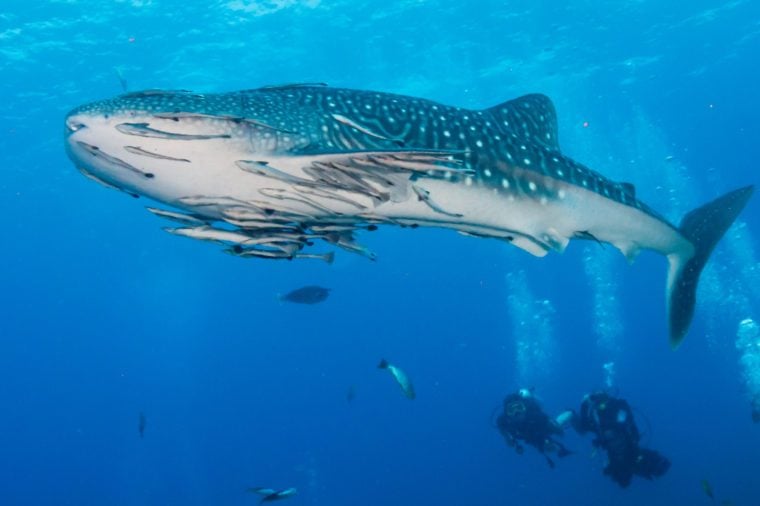
Sucker Fish and Shark

  • Sucker fish attaches to shark fish with the help of dorsal fin feeding on the falling pieces of food and shark does not get any benefit from it therefore, this interaction is Commensalism.
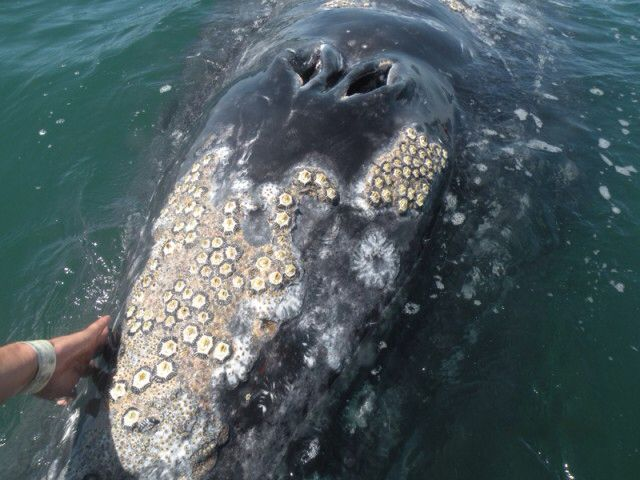
Barnacles and whale

  • Barnacles benefiting from having a place to settle and filter food, while the whales do not seem to suffer any negative consequences from their presence.

Other examples of commensalism are:

  • Spiders spinning webs on plants.
  • Hermit crabs that use discarded snail shells to protect themselves. When commensals dwell on the host’s body, using it as their habitat, it is called Inquilinism

Orchid and Mango tree

  • An orchid growing on the branch of a mango tree is an epiphyte. Epiphytes are plants growing on other plants which, however, do not derive nutrition from them.
  • Burdock seeds on animals- Burdock seeds get attached to the animals and are transported to various places on their back. This helps them to spread in the land. Burdock seeds are very light that animals barely experience their presence. 
  • Cattle egrets eat the insects stirred by the cattle when they are grazing

Cattle and Egrets

Mutualism (+/+)

In this type of symbiosis, both organisms benefit from the relationship.

A classic example of this is the relationship between termites and the protists that live in their gut. The protists digest the cellulose contained in the wood, releasing nutrients for the benefit of the termite. In turn, the protists receive a steady supply of food and live in a protected environment.

Sea Anemone and clown fish

Other examples of mutualism are the algae that live in the tissues of coral in reefs, clownfish that live in the tentacles of sea anemones, in which the anemone protects the clownfish against predators, while the clownfish provides the anemone with excreted nutrients (ammonia, sulfur, and phosphorus).

Oxpecker bird and Buffalo

  • The relationship between the Oxpecker bird and Buffalo where bird eats the insects on the skin of buffalo while the buffalo gets rid of the ticks and insects.

Algae and fungi

  • Lichen representing mutual association between algae and fungi, in which algae is protected by fungi. The fungi provide nutrients for synthesis of food to the algae, while algae provide food to fungi, as they are incapable of synthesising their own food.
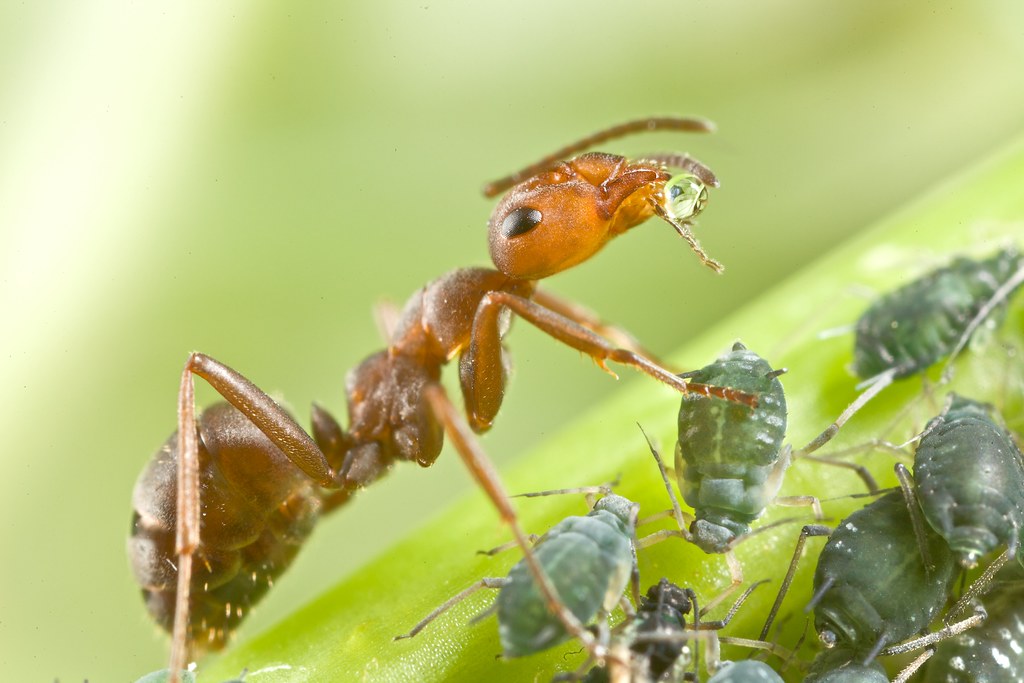
Aphids and Ants

  • Aphids are little sap-sucking insects that secrete honeydew, a sugary liquid that is the waste product of their diet. Many aphid species are known to engage in a mutualistic relationship with ants that feed on the honeydew. In return, some species of ants will protect the aphids from predators and parasites.

corals and algae

  • The corals and algae relationship. The coral provides shelter and essential nutrients for the zooxanthellae to use during photosynthesis, while the zooxanthellae produce synthetised sugars, which the coral feeds on, and oxygen as a by-product.

  • Another example is monkeys and fruit-producing trees. The monkeys’ benefit by eating the fruit, and the trees benefit from the monkeys carrying the seeds away as a method of seed dispersal.
  • Honeybees and Flowers: Honey bees get nectar from flowers and flowers are benefitted by pollination done by honeybees.
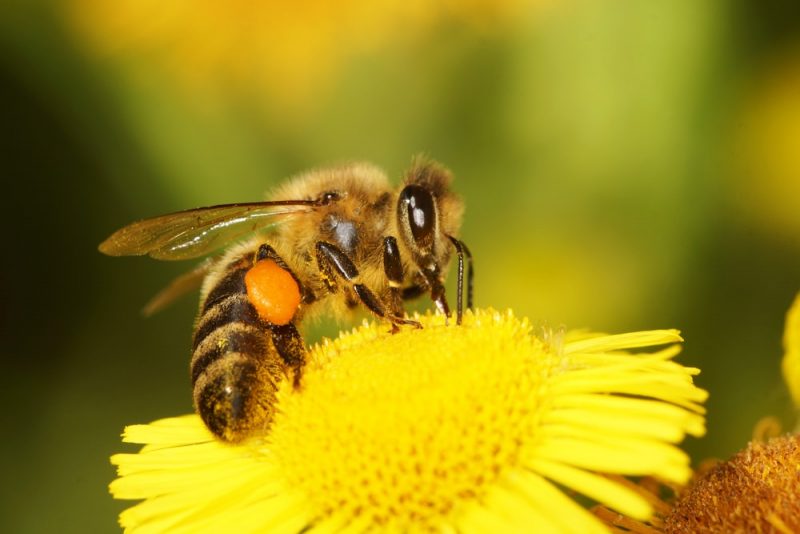
Honeybees and Flowers

Parasitism (+/-)

Parasitism is a relationship where one symbiont benefits (the parasite) and the other (the host) is harmed in some way.

Parasitism is the type of symbiotic relationship or long-term relationship between any two species either plants or animals. Here the parasite gains benefits from the host which in turn harms the host without killing it.

  • External Parasites (Ectoparasite) Leeches (Hirudinea), fleas, ticks, and lice are a few examples of parasites that don’t normally cause disease directly. They suck blood from the host without causing any harm to their host.
  • There are different species of Plasmodium that are picked up by the mosquitoes and transmitted to different people causing Malaria.
  • Tapeworm/ Teania solium can live in the human gastrointestinaltract for years. It spreads through under-cooked pork. These are more than three meters long.
  • Fasciola Hepatica is an endoparasite that affects Liver. Internal parasites show more extreme specialization and have a less complex structure.

Brood parasitism is a breeding strategy in which the brood parasite female evades all parental care by laying its eggs in host nests of the same (conspecific brood parasitism, CBP) or different species (interspecific brood parasitism, IBP) relying on unrelated foster parents to care for their parasitic offspring. Eg. Cuckoo laying eggs in crow’s nest.
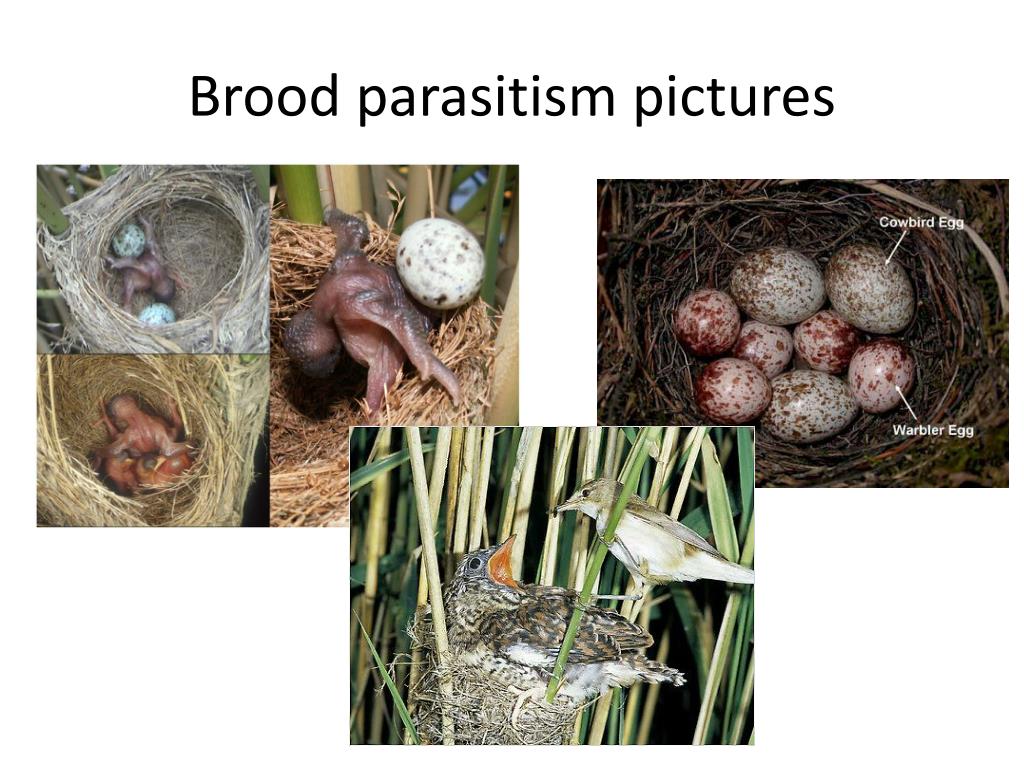
Amensalism (-/0)

Amensalism is a biological interaction between two species in which one is inhibited or destroyed and the other is unaffected.

There are two basic modes:

Competition, in which a larger or stronger organism excludes a smaller or weaker one from living space or deprives it of food. For example, the black walnut tree produces a chemical called juglone that inhibits the growth of many plants beneath it.

Antibiosis, in which one organism is destroyed by metabolic products of another. An example of antibiosis is the interaction between Penicillium and bacteria. The mould Penicillium creates the secretion known as penicillin, which is extremely toxic to bacteria. 

Amensalism:

Predation (+/-)

In this relationship, one organism kills and eats the other. Examples include a jaguar killing and eating a tapir as well as horses eating grass. Unlike parasitism, where the host remains alive while the parasite lives off it, predation results in the death of one of the organisms

Population of predator is generally small because if predator is too efficient or too many in number, they may over exploit its prey which may extinct and following it, predator will also extinct so, predator checks the population of prey but do not extinct them. 

The predator population works according to the prey and help in keeping the prey population in a check. In absence of predators, the population will increase immensely and will affect the normal ecological balance, so they respond functionally.

Competition (-/-)

Competition is when two organisms both want the same limited resource. Because they have to compete for the resource (often food, water, or territory), both organisms are negatively impacted.
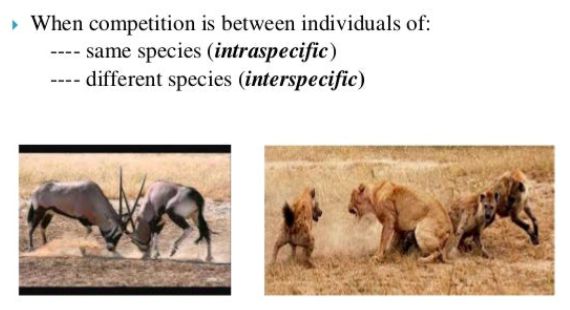
Interspecific competition, in ecology, is a form of competition in which individuals of different species compete for the same resources in an ecosystem (e.g. food or living space).

Competition between members of the same species is called intraspecific competition.

Cheetahs and lions both attempting to hunt the same small herd of zebras is an example of competition. If there aren’t enough zebras for both animals to eat, they will both get less food than what they want and may suffer from hunger/starvation as a result.

In interspecies competition, two species use the same limited resource. Competition has a negative effect on both species. Mostly it occurs when there is a limited resource, and two species are trying to accommodate. This competition has adverse effects on all species utilizing a similar and limited resource at the same time and place making them smaller in population size.

Plant -animal interactions often involve co-evolution of the muralists, that is, the evolution of the flower and its pollinator species are closely linked, with one another. It occurs in mutualism and parasitism where one species is close relationship with the other.

  • Gause’s law of competitive exclusion or just Gause’s law is a proposition that states that two species competing for the same resource cannot coexist at constant population values if other ecological factors remain constant.

  • When two competing life forms attempt to occupy the same niche, only one outcome is possible: One life form will drive out the other.

Symbiosis interaction Chart

Interaction Species A Species B
Mutualism + +
Commensalism + 0
Parasitism +
Amensalism 0
Predation +
Competition

Take Quiz

Now check what you have learnt !!!!!

1. What is an interaction called when an orchid grows on a mango plant?
(a) Commensalism
(b) Parasitism
(c) Amensalism
(d) Mutualism

ANSWER

The relation between a mango tree and an orchid is commensalism. An orchid growing on the branch of a mango tree is an epiphyte. Epiphytes are plants growing on other plants which, however, do not derive nutrition from them. 

2. A Tight one-to-one relationship between many species of fig tree and certain wasps is an example of
(a) Commensalism
(b) Parasitism
(c) Amensalism
(d) Mutualism

ANSWER

The relationship between the fig tree and wasp shows mutualism, the wasp lays its eggs and also pollinates the fig’s inflorescence. On the other hand, the fig not only provides shelter (fruit) for oviposition to wasp but also allows its larva to feed on seeds. 

3. The effect of interspecific competition on niches is to make them?
(a) Smaller
(b) Larger
(c) Change location

ANSWER

In interspecies competition, two species use the same limited resource. Competition has a negative effect on both species. Mostly it occurs when there is a limited resource, and two species are trying to accommodate. This competition has adverse effects on all species utilizing a similar and limited resource at the same time and place making them smaller in population size. So, the correct answer is ‘Smaller’.

4. Co-evolution can be observed in case of:
(a) Commensalism and competition
(b) Parasitism and predation
(c) Amensalism and competition
(d) Mutualism and parasitism

ANSWER

Plant -animal interactions often involve co-evolution of the muralists, that is, the evolution of the flower and its pollinator species are closely linked, with one another. It occurs in mutualism and parasitism where one species is close relationship with the other.

5. In a population of predator and prey it was seen that when the prey population was numerically high the predator population consumed more and more prey. This is because the predator population
(a) Can digest any amount of food
(b) Responds functionally
(c) Responds numerically
(d) Is a voracious feeder

ANSWER

Option B) Respond functionally
The predator population works according to the prey and help in keeping the prey population in a check. In absence of predators, the population will increase immensely and will affect the normal ecological balance, so they respond functionally.

6. The principle of competitive exclusion was stated by
(a) Mac Arthur
(b) Verhuslt and Pearl
(c) C. Darwin
(d) G.F Gause

ANSWER

Gause grew populations of Paramecium aurelia and the larger P. caudatum, in controlled conditions. When these two populations were grown in separate test tubes, the population of each species quickly increased to the carrying capacity. When grown together, determined by available conditions, one species thrived over other. It led to the principle of competitive exclusion that two competing species cannot coexist and in time one or the other would eventually out-compete.

7. (+)(0)–Relationship sign shown by
(a) Amensalism
(b) Predation
(c) Commensalism

ANSWER

Ans: Option C) Commensalism

Interaction Species A Species B
Mutualism + +
Commensalism + 0
Parasitism +
Amensalism 0
Predation +
Competition

8. Match List I with List II. (NEET 2023 question)

  List I  (Interacting species)    List II (Name of interaction)
A Leopard and a Lion in a forest/grassland  I Competition 
B A Cuckoo laying egg in a Crow’s nest  II Brood parasitism 
C Fungi and root of a higher plant in Mycorrhizae III Mutualism
D A cattle egret and a Cattle in a field IV  Commensalism 

Choose the correct answer from the options given below

  1. A-I, B-II, C-IV, D-III
  2. A-III, B-IV, C-I, D-II
  3. A-II, B-III, C-I, D-IV
  4. A-I, B-II, C-III, D-IV

ANSWER

option D) A-I, B-II, C-III, D-IV

9. Match List I with List II: (NEET 2023 Question)

  List I (Interaction)   List II (Species A and B) 
A. Mutualism I. +(A), O(B)
B. Commensalism II. –(A), O(B)
C. Amensalism III. +(A), –(B)
D. Parasitism IV +(A), +(B)

Choose the correct answer from the options given below:

  1. A-IV, B-I, C-II, D-II
  2. A-IV, B-III, C-I, D-II
  3. A-III, B-I, C-IV, D-II
  4. A-IV, B-II, C-I, D-III

ANSWER

Option A) A-IV, B-I, C-II, D-II

Read more
Back to Top
error: Content is protected !!
View Chapters